- Published May 30, 2025
- Last Modified May 30, 2025
- 7 min
Clamp Meter Basics: What You Need to Know & How to Use

In this guide, we'll talk through the clamp meter in depth. What is a clamp meter? How do you use it and how does it work? We'll also cover the primary clamp meter types, their uses and their functions.
So, let's get started and explore the topic in more detail.
What Is a Clamp Meter?
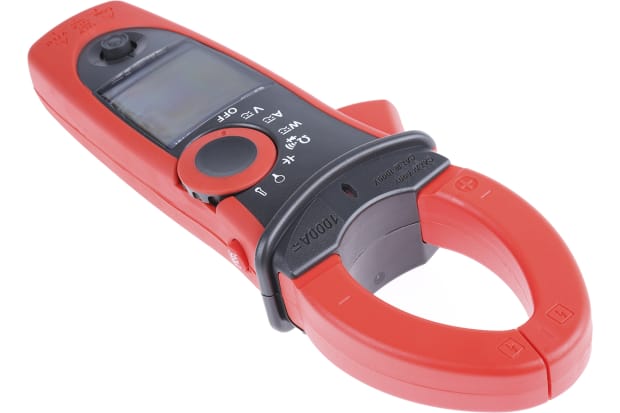
A clamp meter is an essential electrical testing tool designed for measuring current safely and efficiently, especially in live circuits. Unlike traditional multimeters that require breaking a circuit to measure current in series, clamp meters use a unique hinged jaw to encircle a conductor and measure current flow without direct electrical contact. This non-invasive approach not only enhances safety but also allows for quick and easy measurements in a variety of environments.
Clamp meters are sometimes called “tong testers” due to their distinctive clamp-like design. They combine the versatility of a digital multimeter with advanced current sensing capabilities. The jaws of the clamp meter detect the magnetic field generated by current flowing through a conductor, converting this signal into a readable measurement displayed on an LCD screen. In addition to current, many modern clamp meters can measure voltage, resistance, continuity, temperature, frequency, and even capacitance, making them indispensable for electricians and technicians.
Why Use a Clamp Meter?
Clamp meters offer several significant advantages over other electrical measurement tools:
- Safety: The ability to measure current without direct contact with live conductors reduces the risk of electrical shock and minimizes the chance of accidental short circuits.
- Convenience: Clamp meters provide quick, easy access to current readings, especially in tight or hard-to-reach spaces where traditional probes might be impractical.
- Versatility: Many models include additional functions such as voltage, resistance, continuity, and temperature measurement, making them suitable for a wide range of electrical tasks.
- Efficiency: Clamp meters allow for ongoing monitoring and troubleshooting without interrupting power, which is ideal for maintenance and diagnostics in commercial, industrial, and residential settings.
- Cost-Effectiveness: By combining multiple measurement capabilities in one device, clamp meters reduce the need for multiple tools and streamline workflows.
Digital Clamp Meter Uses & Functions
Digital clamp meters are widely used in both commercial and industrial environments. Their primary functions and applications include:
- Current Measurement: Quickly and safely measure AC or DC current without breaking the circuit.
- Voltage and Resistance Checks: Test for voltage drop, resistance, and continuity in electrical circuits.
- Power and Energy Monitoring: Some advanced models can measure power consumption and energy demand, making them useful for energy audits and monitoring.
- Specialized Applications: Certain clamp meters are tailored for specific tasks, such as HVAC system diagnostics, low-current loop testing (e.g., 4–20mA), and detecting earth leakage currents below 5mA.
- Troubleshooting and Maintenance: Ideal for identifying faults, verifying circuit integrity, and supervising installation or repair work.
Clamp meters are also valuable tools for training and supervising new electricians, as they provide a safe and intuitive way to demonstrate electrical principles and measurement techniques.
How Do Clamp Meters Work?
Clamp meters operate on the principle of magnetic induction. When current flows through a conductor, it generates a magnetic field around the conductor. The clamp meter’s jaws detect this magnetic field and convert it into an electrical signal proportional to the current. This signal is then processed and displayed as a current reading.
Most clamp meters use either a current transformer (for AC measurements) or a Hall Effect sensor (for both AC and DC measurements). The Hall Effect sensor is particularly important for measuring DC current, as it can detect the magnetic field regardless of its direction.
Key Components of a Clamp Meter:
- Jaws: Detect the magnetic field around the conductor.
- Jaw Opening Trigger: Opens and closes the jaws for easy placement around conductors.
- Power Switch: Turns the device on and off.
- Backlight Button: Illuminates the LCD display for visibility in low-light conditions.
- Hold Button: Freezes the displayed measurement for recording.
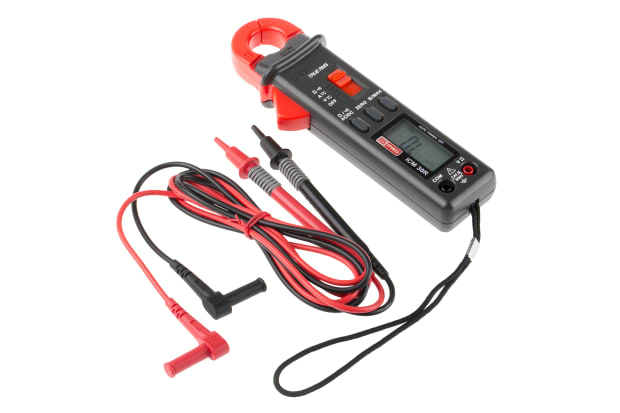
- Input Terminals: For connecting test leads when measuring voltage, resistance, or continuity.
- LCD Display: Shows measurement results and device status.
- Rotary Function Switch: Selects the desired measurement mode (current, voltage, resistance, etc.).
How to Use a Digital Clamp Meter
Using a clamp meter is straightforward, but following best practices ensures accurate and safe measurements:
- Power On: Turn on the clamp meter and, if probes are attached, remove them for current measurement.
- Select Measurement Mode: Use the rotary switch to select AC or DC current, depending on the circuit.
- Open Jaws: Press the jaw opening trigger to open the jaws.
- Place Around Conductor: Position the jaws around a single, insulated conductor. Never clamp around multiple conductors at once, as this will cancel out the current measurement.
- Close Jaws: Ensure the conductor is centered within the jaws for the most accurate reading.
- Read Display: The current measurement will appear on the LCD screen.
- Additional Functions: For voltage, resistance, or continuity measurements, connect the test leads to the appropriate terminals and follow the same selection process.
For Flexible Current Probes: In tight or hard-to-reach spaces, use a flexible probe. Attach the probe to the clamp meter, wind it around the conductor, and select the correct measurement mode. The measurement will display as with the standard jaws.

Tips for Measuring with a Clamp Meter
Here are a few handy tips for you:
- Always use electrical safety gloves and other personal protective equipment when working with live circuits.
- Never clamp around more than one conductor simultaneously. The current will cancel out if it is flowing in opposite directions.
- When measuring DC current, use the zero function to eliminate any offset and improve accuracy.
- Ensure the correct measurement mode is selected before taking a reading.
- Disconnect test leads when measuring current with the jaws to prevent inaccurate readings.
- If readings seem off, double-check the function selection and ensure the conductor is properly centered in the jaws.

What Does the Arrow on the Clamp Unit Mean?
The arrow on the clamp unit indicates the correct orientation for clamping around a conductor. For DC measurements, the arrow should point toward the load to ensure correct polarity. For AC measurements, the arrow helps maintain proper phase alignment, which is important for accurate power measurements.
Different Types of Digital Clamp Meters
There are two main types of clamp meters, each suited to different measurement needs:
Hall Effect Clamp Meters
- Measure Both AC and DC Current: Use a Hall Effect sensor to detect the magnetic field generated by current, regardless of direction.
- Versatile: Suitable for a wide range of applications, including automotive and industrial settings.
- Accurate: Provide reliable measurements for both AC and DC circuits.
Current Transformer Clamp Meters
- Measure AC Current Only: Use a current transformer to detect the magnetic field generated by AC current.
- Simple and Reliable: Ideal for standard AC current measurements in electrical installations.
- Common in Industrial Settings: Widely used for maintenance and troubleshooting in commercial and industrial environments.
Flexible vs. Rigid Jaws: Some clamp meters feature flexible current probes, which are ideal for measuring current in tight or awkward spaces. Rigid jaws are more common and suitable for most general-purpose applications.
Measurement Categories for Clamp Meters
Clamp meters are classified into measurement categories based on the types of circuits they are designed to test. Selecting the correct category is essential for safety and accuracy:
Category | Best Used for |
|---|---|
| Category I | Testing specially-protected internal mains-derived circuits or circuits that are not directly connected to the mains |
| Category II | Testing circuits that are directly connected to low-voltage installations |
| Category III | Testing circuits involved with building installation, such as wiring, circuit breakers, and distribution boards, as well as industrial equipment |
| Category IV | Testing at the source of low-voltage installation, such as electricity meters, ripple control units, and overcurrent protection devices |
What to Consider When Choosing a Clamp Meter?
When selecting a clamp meter, consider the following factors to ensure you choose the right tool for your needs:
- Jaw Size: Ensure the jaws can accommodate the conductors you plan to measure. Flexible probes are available for larger or awkwardly placed conductors.
- Current Rating: Check the maximum current the meter can measure. Some models are designed for high-current applications (up to 2,500A).
- Measurement Functions: Determine if you need to measure AC, DC, or both. Consider additional features like voltage, resistance, continuity, temperature, frequency, and capacitance.
- True RMS Capability: For accurate measurements of non-sinusoidal waveforms (e.g., variable speed drives, HVAC circuits), choose a true RMS clamp meter.
- Measurement Category: Select a meter rated for the appropriate category based on your application.
- Data Logging and Connectivity: Advanced models offer data logging, Bluetooth connectivity, and app integration for remote monitoring and analysis.
- Durability and Safety Features: Look for robust construction, safety ratings, and features like backlit displays and auto-ranging for ease of use.
Summary
Clamp meters are indispensable tools for electricians, technicians, and anyone working with electrical systems. Their ability to measure current safely and efficiently, combined with versatile additional functions, makes them a cornerstone of modern electrical testing and troubleshooting. By understanding the different types, features, and best practices for use, you can select the right clamp meter for your needs and ensure accurate, safe, and reliable measurements every time.