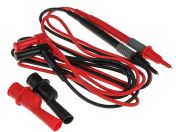
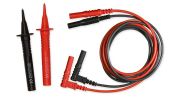
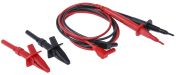
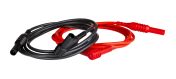
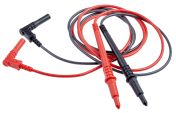
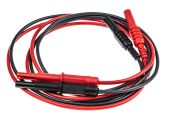
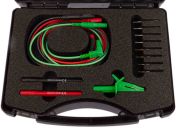
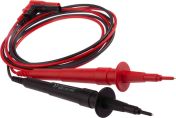
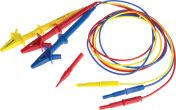
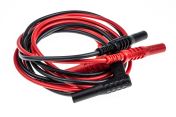
Multimeter leads are accessories used to connect a multimeter to a circuit or component in order to measure electrical parameters such as voltage, current, continuity, and resistance. Most leads consist of flexible, insulated cables with standard connectors (typically 4 mm banana plugs, often shrouded) at the meter end and probe tips or connectors at the test end.
These leads are built to meet specific safety categories (CAT ratings), as defined by standards such as IEC 61010, which indicate the level of transient overvoltage protection and the environments in which the leads can be used safely.
At RS Philippines, our range covers the formats different jobs require, from everyday multimeter test leads and pointed multimeter probes to test-probe accessories and a complete test-lead kit for multimeter work that bundles probes, clips, and adapters in one set.
What Are Multimeter Test Leads?
Multimeter test leads are insulated conductors fitted with connectors and probe interfaces that allow a multimeter to make safe electrical contact with a test point. Their purpose is to transmit electrical signals accurately from the circuit to the multimeter while maintaining electrical insulation for user safety.
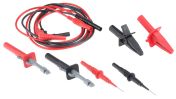
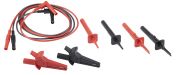
A typical multimeter lead has a connector (usually a banana plug) at the meter end and a probe, clip, or specialized attachment at the test end. Depending on the kit, it may also include shrouded plugs, insulated cables, alligator clips, and interchangeable accessories that expand connection options and improve reach and grip.
How Multimeter Leads Work
Multimeter leads act as the connection between the electrical circuit and the meter, ensuring signals are transferred safely and accurately for reliable measurements.
- Signal Transfer: Leads carry electrical signals from the test point to the multimeter with minimal resistance and interference, allowing accurate measurement of voltage, current, or resistance.
- Electrical Contact: Probe tips establish electrical contact with the circuit, and their design (pointed, hook, or clip) affects stability and accuracy during measurement.
- Insulation and Safety: Insulated cables and shrouded connectors prevent accidental contact with live conductors, reducing the risk of electric shock during use.
- Measurement Mode Compatibility: Leads are designed to work with different multimeter functions, but current measurement requires correct connection to the meter’s current input and appropriate lead rating.
Types of Multimeter Leads and Probes
Different test points require different multimeter lead and probe styles.
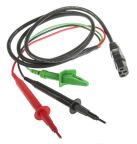
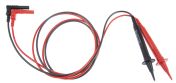
- Standard Probe Leads: General-purpose probes with pointed tips used for common measurements such as voltage, resistance, and continuity checks. They are suitable for most electrical troubleshooting tasks.
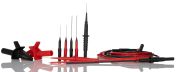
- Fine-Tip Multimeter Probes: Slim probe tips designed for accessing closely spaced components, such as PCB pads or small terminals. They reduce the risk of shorting adjacent conductors during testing.
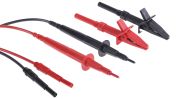
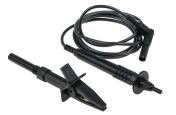
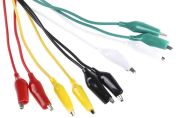
- Alligator Clip Leads: Clip-style connectors that attach securely to terminals, enabling hands-free measurements. They are useful for extended testing or maintaining stable contact during diagnostics.
- Right-Angle or Straight Plug Leads: Different connector orientations allow flexibility in cable routing and compatibility with meter designs. Selecting the correct type can improve ergonomics and reduce cable strain.
- Fused Test Leads: Leads that incorporate an inline fuse to provide additional protection in fault conditions, particularly when measuring current in higher-energy circuits. They should be used in accordance with manufacturer ratings and application requirements.
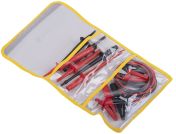
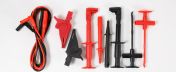
- Test Lead Kits: A test lead kit may include multimeter probes, clips, hooks, and adapters to provide broader testing coverage. These are suitable for users who require flexibility across different measurement tasks.
Checking Your Multimeter Leads Before Use
Ensure multimeter leads are in good condition before use to maintain industrial electrical safety and accuracy.
- Visual Inspection: Check the insulation along the entire length of the lead for cracks, cuts, burns, stiffness, or any exposed conductor. Damaged insulation compromises safety and can lead to incorrect readings or electric shock.
- Probe Condition: Inspect probe tips for wear, bending, corrosion, or looseness, as poor contact can affect measurement accuracy. Ensure protective caps and finger guards are intact where applicable.
- Connector Fit: Make sure plugs seat firmly in the multimeter sockets without wobbling. A poor connection can result in intermittent readings or measurement errors.
- Continuity Test: Touch the probe tips together and confirm the meter reads near zero resistance or shows continuity. This verifies the internal conductor is intact and functioning correctly.
- Safety Rating: Confirm that the CAT rating and voltage rating of the leads match the intended measurement environment. Using underrated leads increases safety risk in high-energy circuits.
- Replace When Doubtful: Replace leads immediately if damage, uncertainty in rating, or unreliable readings are observed. Using compromised leads in electrical testing introduces unnecessary risk.
Common Applications of Multimeter Leads
Multimeter leads are used across a range of electrical and electronic testing tasks.
- Electrical Troubleshooting: Used to measure voltage and continuity in circuits such as panels, outlets, switches, and power supplies. Proper lead selection supports safe testing in different voltage categories.
- Electronics Testing: Multimeter leads are used for testing small components and circuits, including resistance, continuity, and diode checks. Fine-tip probes are often required for precision work on PCBs.
- Automotive Maintenance: Battery, alternator, sensor, and wiring checks using suitable multimeter test probes.
- Facilities and Industrial Maintenance: Testing motors, control circuits, relays, and machine wiring. Suitable CAT-rated leads are essential for safety in industrial environments.
- Hands-Free Measurement: Used with clip leads to maintain stable electrical connections during longer tests. This improves safety and allows operators to use tools or adjust settings simultaneously.
How to Choose the Right Multimeter Leads?
Choosing the right multimeter leads ensures accurate readings, safety, and reliable performance.
- Safety Rating: Match the lead category and voltage or current rating to the test environment. This is critical for mains or industrial work, where the meter and leads should both meet or exceed the installation's CAT rating, as defined by IEC 61010.
- Voltage and Current Rating: Ensure the leads are rated for the maximum voltage and current expected in the application. Using leads outside their rating can result in insulation failure or incorrect measurements.
- Connector Compatibility: Check that the plug type (typically 4 mm banana plug) and shrouding match the multimeter’s input terminals.
- Probe Type and Tip Design: Choose probe styles based on the test environment, such as fine tips for electronics or clips leads for hands-free work. The correct probe improves measurement stability and reduces testing errors.
- Lead Length and Flexibility: Longer leads help around panels, while flexible silicone insulation improves handling in tight spaces.
- Insulation Material: High-quality materials such as silicone or PVC affect durability, temperature resistance, and flexibility. The choice impacts long-term performance in different working environments.
- Accessories: Choose a test lead kit if you regularly need clips, hooks, adapters, or different multimeter probe tips.
- Budget and Availability: Compare multimeter test lead prices by rating, build quality, and suitability, and check their availability in the Philippines before you buy.
Safety Tips When Using Multimeter Leads
Safe handling of multimeter leads is essential for protecting both the user and the equipment.
- Set the Meter Correctly: Always select the correct measurement function and range before contacting the circuit. Incorrect settings can damage the meter or produce unsafe conditions.
- Use One Hand Where Appropriate: Keep one hand clear when testing live circuits so current cannot pass hand to hand across your chest.
- Keep Fingers Behind Guards: Always hold probes by the insulated areas and stay behind the finger guards at all times to minimize exposure to live conductors.
- Avoid Damaged Leads: Do not use leads with visible damage or uncertain ratings, as they may fail under load. Always replace compromised leads immediately.
- Store Properly: Loosely coil the leads and avoid sharp bends or twists that can break the internal wire.
Why Buy Multimeter Test Leads from RS Philippines?
From general testing to industrial applications, RS Philippines offers a wide range of multimeter leads, including standard leads, fine-tip probes, alligator clips, fused leads, and complete kits. The range features trusted brands such as Fluke, Hirschmann Test & Measurement, and Chauvin Arnoux.
Clear specifications for safety rating, connector type, probe style, lead length, and compatibility make it easy to compare and choose leads that match your meter and application. For buyers comparing multimeter test lead prices in the Philippines, we make it easy to compare build quality, ratings, and value. You can also explore our wider range of multimeter testers and multimeter replacement parts to complete your testing setup.
Orders received before the daily cut-off time are dispatched on the same working day. Delivery charges and lead times may vary depending on order value, product type, and location. For full details on shipping options and estimated timelines, refer to the delivery page.