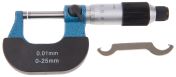
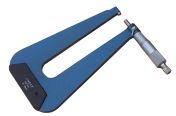
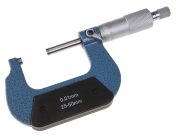
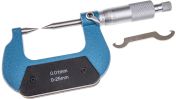
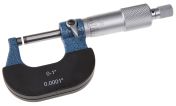
Micrometers
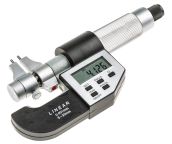
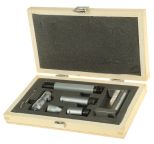
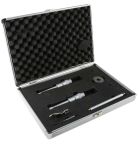
Micrometers are precision measuring instruments designed to deliver exceptionally accurate dimensional measurements in industrial and manufacturing environments. Commonly referred to as a micrometer screw gauge or simply a micrometer gauge, these tools are indispensable in machining, engineering, and quality control applications. Micrometers are particularly valued where fine measurement tolerances are required, often achieving accuracy to within 0.01 mm (10 microns) or better.
RS Philippines offers a comprehensive range of measuring tools micrometer solutions, including digital micrometers, inside micrometers, and micrometer screw gauges, catering to professionals who demand reliable and repeatable accuracy.
What Are Micrometers Composed Of
A micrometer screw gauge is engineered with several key components, each fulfilling a critical role in the measurement process.
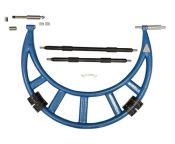
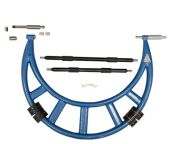
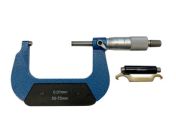
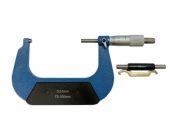
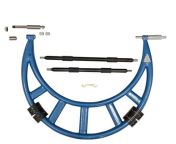
- Frame: The rigid C-shaped frame provides structural stability and houses the primary components. Its stiffness ensures dimensional integrity during measurement.
- Anvil: The fixed measuring face against which the object rests during measurement. Quality micrometers use carbide-tipped anvils for enhanced durability and wear resistance.
- Sleeve (Barrel or Stock): The stationary cylindrical component with a linear scale engraved in metric or imperial units. This scale forms the primary reading reference.
- Spindle: A precisely machined screw-driven movable face that advances towards the anvil as the thimble rotates. Together with the spindle, it makes direct contact with the object being measured.
- Thimble: The cylindrical rotating section with graduated markings that translate the spindle’s linear movement into angular displacement, allowing fine measurements to be read, typically in hundredths of a unit (e.g., 0.01 mm).
- Locknut (Lock-Ring or Thimble Lock): Used to secure the spindle in place once the desired measurement is obtained, ensuring accuracy during inspection or transfer.
- Screw: The finely threaded screw converts rotational motion of the thimble into linear displacement of the spindle, underpinning the micrometer’s precision.
How Do Micrometers Work
The operational principle of a micrometer lies in the screw thread mechanism, where rotation of the thimble translates into finely controlled linear motion of the spindle.
Principle of Operation
The core function of a micrometer is based on the fine pitch of its internal screw. A single rotation of the thimble advances the spindle a fixed distance equal to the screw's pitch.
This mechanical relationship allows for the precise translation of rotation into a linear measurement, with accuracy typically reaching up to 0.01mm or 0.0001 inches. The final measurement is a composite reading from the primary scale on the sleeve and the finer graduations on the thimble.
Measuring Process
As the thimble is rotated, the spindle advances toward the anvil until it makes contact with the workpiece. The reading is taken by combining the markings on the sleeve and the thimble.
Measurement Accuracy
Accuracy stems from the fine pitch of the screw. In industrial settings, micrometers are preferred over calipers when tolerances are critical.
Measurement Applications
- Outside measurements: Thickness, diameter of shafts, or ensuring the precise diameter of tools like twist drill bits.
- Inside measurements: Bore diameters with inside micrometers.
- Depth measurements: Achieved with a depth micrometer, this measures the depth from a surface to a lower point, such as the depths of slots, grooves, and recesses.
Types of Micrometers
Industrial applications demand different micrometer formats depending on the dimension being evaluated.
- Outside Micrometer: Used for measuring external dimensions such as shaft diameters and sheet thickness.
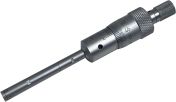
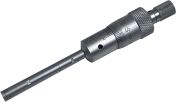
- Inside Micrometer: Specialised for internal dimensions such as bores, grooves, and cavities.
- Depth Micrometer: Designed to measure depths of blind holes, slots, and recesses.
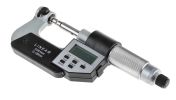
- Digital Micrometer: Provides an electronic display for a direct digital readout, which reduces the potential for reading errors and speeds up the measurement process.
- Micrometer Screw Gauge: The traditional analog variant, commonly used in mechanical workshops where robust reliability is required.
- Micrometer Caliper: A hybrid instrument combining micrometer screw gauge functionality with caliper versatility, useful in machining environments.
Advantages of Using Micrometers
- High Precision: Micrometers provide sub-millimeter accuracy, often at 0.01 mm increments, making them suitable for tight-tolerance machining.
- Ease of Use: Graduated scales and straightforward operation ensure efficient use even in production environments.
- Durability: Manufactured with hardened steel or carbide contact points, micrometers withstand repeated industrial use.
- Versatility: Applicable across diverse industries — automotive, aerospace, metal fabrication, and electronics manufacturing.
- Cost Efficiency: Analog micrometer screw gauge price options are affordable, while digital variants offer long-term efficiency benefits despite a higher screw gauge price.
How to Choose the Right Micrometer
Selecting the correct micrometer involves assessing both technical specifications and the application context.
- Measurement Range: Choose a micrometer with a range appropriate to the workpiece dimensions.
- Precision Level: For general workshop use, 0.01 mm accuracy is adequate, while laboratories may require higher precision models with vernier or digital scales.
- Digital vs Analog: Digital micrometers provide rapid, error-free readings, whereas analog micrometers offer tactile feedback suited for training and manual inspection.
- Type of Measurement: Match the instrument type — outside micrometer, inside micrometer, or depth micrometer — to the measurement task.
- Material and Build Quality: Select micrometers with carbide-tipped anvils and corrosion-resistant finishes to ensure long service life.
- Brand and Calibration Support: Consider trusted brands known for their quality and durability. Ensure that calibration certificates are available and that you have access to reliable service and recalibration in Philippines, to maintain quality assurance.
The Leading Supplier and Distributor of Micrometers in Philippines
RS is your trusted partner for high-precision micrometers. We offer a comprehensive inventory from top brands in the industry, such as Moore & Wright, Mitutoyo, and RS PRO. Our wide selection includes digital, outside, and depth micrometers with various measurement ranges at affordable prices, guaranteeing you'll find the ideal tool for your specific needs.
To complete your measurement toolkit, we also provide other essential metrology instruments like digital calipers, dial indicators, and gauge blocks. Purchase your inside micrometers, outside micrometers, micrometer stands, and other precision accessories from our online store today. For complete information regarding our ordering procedures, shipping options, and associated costs, please visit our delivery information page.