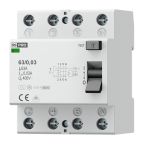
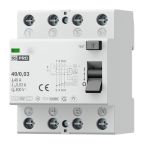
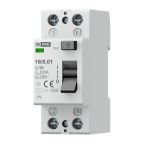
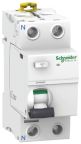
RCCBs
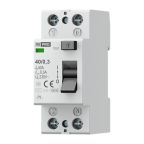
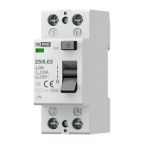
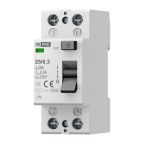
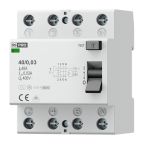
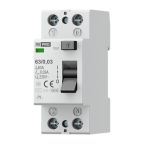
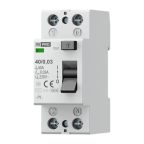
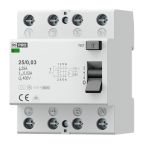
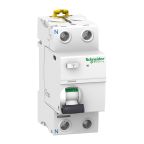
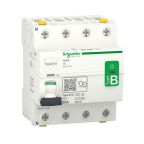
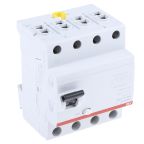
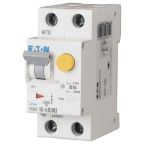
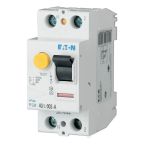
A residual-current circuit breaker (RCCB) is a critical safety component that instantly disconnects power upon detecting leakage current to ground. By rapidly interrupting the circuit during a fault, it provides essential protection against fatal electric shocks and reduces the risk of electrical fires caused by insulation failure.
Implementing an RCCB circuit breaker ensures modern low-voltage safety across residential and industrial environments. This precise response to current leakage makes the device an indispensable safeguard for comprehensive hazard isolation in any electrical installation.
What Is an RCCB (Residual Current Circuit Breaker)?
An RCCB is a switching device engineered for high-sensitivity earth-fault detection. Unlike MCBs, which protect against overcurrent and short circuits, the RCCB breaker is specifically designed to sense low-level leakage that could be fatal to humans but insufficient to trip a standard fuse.
These units are typically installed in distribution boards to protect sub-circuits in high-risk areas like kitchens or laboratories. Since they do not provide overload protection, they are used in conjunction with MCBs to ensure the system is shielded from both leakage hazards and electrical overloads.
How Does an RCCB Work?
A residual current circuit breaker operates by using a core-balancing transformer that continuously monitors the live and neutral conductors. Under normal conditions, the current entering and returning from the circuit are equal, creating opposing magnetic fields that cancel each other out.
If a fault occurs — such as current leaking through damaged insulation — this balance is lost, creating "residual current." The transformer detects this discrepancy and induces a voltage to trigger the tripping mechanism. For personal safety, devices are typically rated at 30 mA to disconnect power within 40 milliseconds, while 100 mA or 300 mA ratings are used for broader equipment and fire protection.
What Is the Difference Between an RCCB and an RCD?
"RCD" (Residual Current Device) is the generic term for any safety device that trips on residual current to prevent electric shock. An RCCB (Residual Current Circuit Breaker) is a specific type within this family. While the terms are often used interchangeably, an RCCB technically refers to a standalone device that provides earth-leakage protection but lacks built-in defense against overcurrent or short circuits.
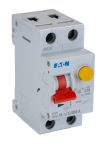
The RCD family also includes the RCBO, which combines residual current detection with the overcurrent protection of an MCB. In practice, a residual current circuit breaker is installed alongside separate MCBs to provide a complete safety solution. Choosing between them depends on whether you require a dedicated leakage switch or an all-in-one protective device.
What Are the Different Types of RCCB and RCD?
Selecting the right residual current circuit breaker depends on the specific electrical loads and the configuration of your installation. These devices are primarily categorized by the types of current leakage they can detect and their physical design:
Waveform Detection Types:
- Type AC: Designed for standard sinusoidal AC; ideal for basic residential lighting and resistive heating.
- Type A: Detects both AC and pulsating DC; the modern standard for homes with electronics like PCs, LED drivers, and smart appliances.
- Type B: Provides the broadest protection, sensing AC, pulsating DC, and smooth DC; essential for EV chargers, solar inverters, and high-end industrial drives.
Sensitivity Ratings (𝐼Δ𝑛):
- 10 mA to 30 mA: High sensitivity for personal safety and shock prevention in domestic and damp environments.
- 100 mA to 300 mA: Medium sensitivity primarily used for equipment protection and fire prevention in commercial and industrial settings.
Mounting and Design: Most units are designed for standard DIN-rail mounting, ensuring they snap directly into consumer units and distribution boards for modular convenience.
Typical Applications of RCCBs
The primary role of a residual current circuit breaker is to safeguard people and property across various environments by isolating electrical faults.
- Residential Installations: Used in homes to protect socket and bathroom circuits, significantly reducing the risk of electric shock in high-moisture areas.
- Commercial Buildings: Essential in offices and retail spaces to protect groups of circuits and ensure compliance with modern safety regulations.
- Industrial Environments: Deployed on distribution boards and workshops where portable tools, heavy machinery, or wet conditions increase the likelihood of earth leakage.
- Specific Risk Areas: Critical for outdoor lighting, EV charging stations, and agricultural buildings where exposure to the elements makes the RCCB a mandatory safety feature.
How to Choose the Right RCCB
Selecting the correct RCCB requires matching the device specifications to your installation's electrical demands and safety standards.
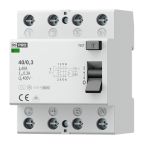
- System Voltage and Poles: Choose a 2-pole model for single-phase systems or a 4-pole version for three-phase configurations.
- Rated Current (𝐼n): Ensure the device's rated current (e.g., 25A, 40A, or 63A) matches or exceeds the maximum load of the protected circuits.
- Sensitivity (𝐼Δ𝑛): Select 30 mA for personal protection against shock, or 100 mA/300 mA for feeder circuits and fire prevention.
- Coordination: Verify selectivity with upstream and downstream protective devices to prevent nuisance tripping and ensure only the faulty circuit is isolated.
- Budget and Local Availability: Compare prices of residual-current circuit breakers in the Philippines to find high-quality solutions.
Why Buy RCCBs from RS Philippines?
RS Philippines stocks a comprehensive range of residual-current circuit breakers from leading brands, including ABB, Schneider Electric, and Siemens. We offer transparent, competitive prices alongside real-time inventory updates. Whether you need to buy RCCB units for home safety or a specialized RCCB circuit breaker for industrial power distribution, our selection fulfills all technical and safety specifications.
Explore our collection online to access technical datasheets and find the ideal RCCB breaker for your system. Take advantage of a streamlined one-stop-shop experience with fast, reliable shipping throughout the Philippines. For details on shipping and fees, please visit our Delivery page.