PCB Headers
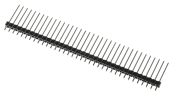
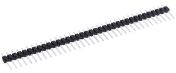
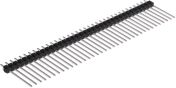
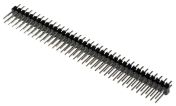
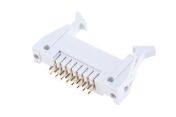
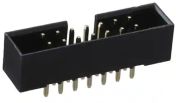
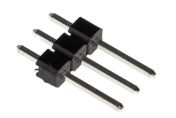
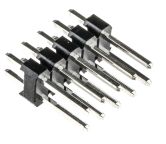
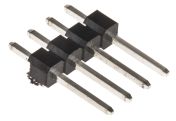
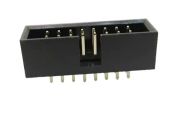
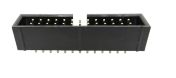
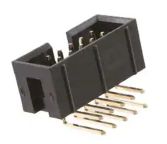
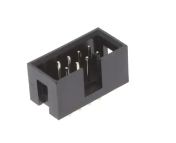
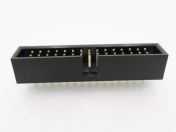
PCB (Printed Circuit Board) headers are electrical connectors that allow multiple connections to a PCB through a single block. Typically, one side of the header is designed to be surface-mounted and soldered onto the board, while the opposite side facilitates external connections. The pins on the header may also be housed within a shroud for enhanced security, alignment, and pin protection.
Why Use PCB Headers?
PCB headers offer multiple advantages in electronic design, including:
- Simplified Connections: PCB headers make it easy to attach and detach components without directly soldering wires to the board. This is particularly useful during testing, prototyping, or when replacing parts.
- Space Efficiency: It consolidates multiple connections into a compact block, freeing board space for additional components.
- Design Flexibility: Available in various sizes, shapes, and configurations, PCB headers can accommodate everything from small DIY projects to complex industrial devices. Their flexibility allows designers to create modular, expandable, and scalable systems.
- Cost-Effectiveness: Standard PCB header connectors reduce the need for custom connectors, lowering both production and inventory costs.
Types of PCB Headers
The types of PCB headers are categorized into 3 different ways:
** Single-Row vs. Double-Row Headers**
- Single-Row Headers: Featuring a single line of pins, they are compact and ideal for projects that require only a few connections or have limited board space. Single-row headers are often sufficient for small-scale or straightforward designs.
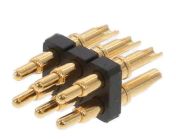
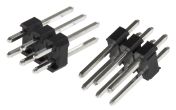
- Double-Row Headers: Double-row headers double the number of pins within the same footprint by arranging two parallel rows. This allows for more connections without taking up additional board space. They are commonly used in more complex projects where both space efficiency and higher connectivity are important.
Shrouded vs. Non-Shrouded Headers
- Shrouded Headers: These headers include a protective cover, or shroud, around the pins that prevents the pins from bending, reducing the risk of damage and ensuring correct alignment during connection. Shrouded headers are ideal for applications where durability and reliable connections are critical.
- Non-Shrouded Headers: Without a protective cover, these headers are smaller, lighter, and easier to fit into tight spaces. However, the pins are more exposed and vulnerable to bending or damage. Non-shrouded headers work well in simple setups where space is limited, and the risk of pin damage is low.
Angled and Machine-Pin Headers
- Angled Headers: These headers have pins bent at a specific angle, typically 90 degrees. They are perfect for situations where vertical space is limited or where a sideways connection is required. Angled headers provide flexibility in tight layouts where straight headers may not fit.
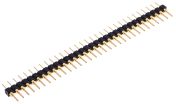
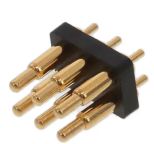
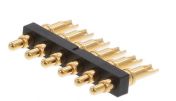
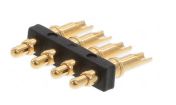
- Machine-Pin Headers: Designed for durability, machine-pin headers feature round pins that fit precisely into corresponding round holes on the PCB. This ensures strong electrical contact and long-lasting performance. Although typically more expensive, they are ideal for applications that demand reliable, high-quality connections.
Applications of PCB Headers
PCB headers are versatile and used across multiple industries and applications:
- Development & Prototyping Boards: Devices like Raspberry Pi and Arduino rely heavily on PCB headers to provide essential connectivity. These headers make it simple to attach sensors, displays, and other modules, enabling hobbyists and developers to quickly build, test, and modify projects.
- Motherboards: PCB headers serve as the connection points for power supplies, fans, USB ports, front-panel buttons, and other peripherals. Headers help organize the motherboard, making installation and replacement of components easier.
- Home Electronics: PCB headers are integral to many household electronics, including televisions, gaming consoles, and smart appliances. They connect internal circuits, such as linking the power button to the main board or connecting different modules inside a smart TV.
- Automotive Electronics: Vehicles are packed with electronics, from infotainment systems to advanced driver assistance systems (ADAS). PCB headers facilitate communication between these systems, connecting sensors, control modules, and onboard computers.
How to Choose the Right PCB Header
Key factors to consider before purchasing a PCB header include:
- Determine the Right Pitch: The pitch is the distance between two adjacent pins on a header. Smaller pitches, such as 1.27mm, allow more connections within a compact area, making them ideal for dense designs. Larger pitches, like 2.54mm, are generally easier to solder and are more beginner-friendly, especially for prototypes. The choice of pitch depends on available board space, the level of precision required, and the balance between usability and performance.
- How the PCB Header Is Mounted: Where you place headers on your PCB affects both usability and electrical performance. Proper placement makes the board easier to assemble, connect, and troubleshoot. Avoid placing headers where other components may obstruct access. Thoughtful positioning also supports better signal routing, reduces noise or interference, and enhances overall board performance.
- Consider Shrouding & Protection Needs: Shrouded headers provide alignment and pin protection for frequent use or harsh environments. For rugged environments or applications with frequent plugging/unplugging, shrouded options offer better durability and reliability. Non-shrouded headers are more compact and suitable for low-risk or space-constrained designs.
- Current Rating: The current rating indicates the maximum current a pin can safely carry without overheating. Exceeding this limit can damage both the header and the PCB. Always choose a header with a current rating higher than the maximum load expected in your circuit. A proper safety margin improves reliability and reduces the risk of failures.
- Budget & Local Availability: When comparing PCB header prices, consider shipping, lead times, and local stock availability. Buying from local suppliers helps reduce downtime, especially for urgent prototyping or maintenance work.
- Supplier & Quality: Shop for PCB headers at a trusted supplier that provides datasheets, certifications, and reliable delivery.
Why Buy PCB Headers from RS Philippines?
Choosing RS Philippines for your PCB headers ensures you get reliable components backed by quality, availability, and excellent value. Our extensive inventory includes a full range of standard headers, including single-row, double-row, male, female, straight, right-angle, and multiple-pitch options, so you can easily find the exact part your project requires.
For businesses or professionals looking for high-quality PCB headers, RS Philippines is a trusted supplier offering a wide selection from reputable brands such as Samtec, Molex, and TE Connectivity. Besides PCB headers, we also carry other types of connectors such as IDC connectors, FPC connectors, crimp contacts and more. If you need more components for your application, check out our selection of spade terminal connectors, USB cables, and more.
Ready to order? Visit our delivery information page to find out more about your delivery options and fees.