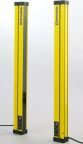
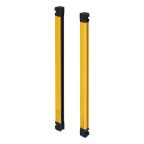
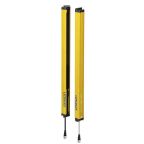
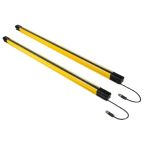
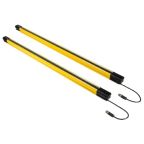
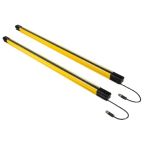
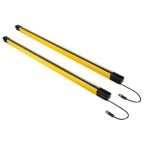
Light Curtains
Light curtains are safety sensors that are used to detect when a person or object enters a hazardous machine zone. They provide non-contact protection and allow quick, unobstructed access, making them suitable for applications involving frequent loading, unloading, setup, or adjustment tasks.
RS Philippines supplies a comprehensive range of safety light curtains from trusted global brands such as SICK, Omron, and ABB, all available at competitive prices. Whether you need body detection or industrial-grade environmental protection, you can find reliable solutions to meet your machine safety requirements. Shop light curtains with RS Philippines today for quality products, technical documentation, and dependable local service.
What Is a Safety Light Curtain and How Does It Work?
Safety light curtains, also known as safety light barriers or safety light guards, are optoelectronic protective devices designed to safeguard personnel working near moving or hazardous machinery.
Instead of using physical guards, a light curtain creates an invisible field of infrared beams between a transmitter and a receiver. When any of these beams are interrupted, the system instantly signals the machine’s safety circuit to stop, preventing access to danger zones while the machine is in motion.
Its restart behavior depends on system configuration. In many safety-critical applications, a manual reset device located outside the hazard zone is required to restart the machine. Some models support automatic restart in lower-risk applications where permitted by risk assessment. Because safety light curtains react within milliseconds, they deliver rapid stopping performance that is difficult to match with mechanical guarding alone.
Types of Light Curtain Sensors
Different types of light curtains are often categorized in different ways, and knowing the different types can help you determine the right one for your facility:
By Safety Rating
Light curtains are also classified by safety performance rating, Type 2 or Type 4, according to international safety standards. This classification determines where each type can be used.
- Type 4 Light Curtains: These are intended for high-risk applications and provide continuous fault monitoring. Internal circuits constantly self-check, and if a fault is detected, the safety outputs shut down immediately and prevent restart until the issue is corrected. Because of their advanced diagnostics and higher safety integrity, Type 4 models are commonly required on presses, robots, and hazardous automated machinery and are available in finger, hand, and body detection resolutions.
- Type 2 Light Curtains: These safety light barriers are suited to lower-risk applications, such as lighter-duty guarding, inspection equipment, or as supplementary protection where the assessed risk level allows. They perform periodic self-tests, meaning a fault may only be detected during the next test cycle, and are typically available only in hand- and body-detection formats.
By Scale of Protection
Safety light curtains are available in different designs to suit the level and scale of protection required around hazardous machinery. These include:
- Point-of-Operation Control (POC) Safety Light Curtain: These light curtains are designed for close-range protection at the point where the operator interacts with the machine. With fine resolutions capable of detecting fingers, hands, or arms, these curtains are typically mounted close to the hazard and commonly used on presses, assembly equipment, and compact automated workstations.
- Perimeter Access Control (PAC) Safety Light Curtain: They provide larger-scale protection and are intended to detect a full body entering a hazardous zone. Instead of guarding a small opening, they create a virtual “fence” around machines or robotic cells. These systems suit applications where personnel should not approach the machine during operation, but occasional supervised access is required for maintenance or setup.
Selecting the Right Light Curtains
Choosing the right light curtain is essential for protecting operators while keeping your production running efficiently. Start by considering the safety and performance requirements of your machine:
- Define the Risk Level: Assess the machine’s risk category. Higher-risk applications (such as presses or hazardous motion) typically require Type 4 safety light curtains, while Type 2 may be acceptable for lower-risk environments. Getting the performance level right ensures the system will reliably stop dangerous motion when needed.
- Choose Proper Scale of Protection: Match the resolution and protective height to the type of access you need to secure. For instance, if you want a safety light curtain for only finger or hand detection, opt for POC light curtains and PAC for full body protection.
- Check Range & Alignment: Confirm the maximum sensing range required between the emitter and receiver. Ensure there is enough mounting space and account for potential obstructions.
- Account for Response Time & Safety Distance: Determine the minimum safety distance from the hazard using the light curtain’s response time plus the machine’s stopping time. This calculation ensures the machine stops before the operator reaches the danger zone.
- Decide on Control Features: Choose control and monitoring functions that match your process requirements, such as restart interlocks, EDM (External Device Monitoring), or muting and blocking. These features are especially valuable in pallet handling, conveyor, and automated systems.
- Consider Environment & Durability: The safety light curtain should be able to withstand site conditions. Therefore, check their IP rating for dust and water protection, temperature tolerance, washdown-safe housings for food and pharma, and shock and vibration resistance for heavy industry.
- Plan Integration & Wiring: Verify compatibility with your existing safety system, including OSSD safety outputs, connector type, and wiring, safety controller or relay interface. Good integration means faster installation and fewer wiring errors.
- Compare Cost, Support & Availability: When reviewing light curtain price and light curtain sensor price, look beyond the initial purchase. Consider brand reliability, spare parts availability, local support, and warranty coverage.
Typical Applications of Light Curtains
Safety light curtains are widely used wherever operators interact with automated machinery or where there is a risk of reaching into hazardous areas.
- Packaging Machines: They are used for carton sealers, labeling lines, form–fill–seal machines, and palletizing cells to protect operators during loading and clearing jams.
- Process Machinery: They are typically used for equipment such as mixers, cutters, and automated assembly stations where operators may need occasional access.
- Automated Warehouses: In logistics, conveyors, transfer stations, and robotic palletizing systems often use safety light curtains to secure loading zones and transfer points.
- Textile Machinery: Textile cutting, winding, and finishing machines benefit from non-contact safeguarding, protecting operators from rollers, blades, and pinch points while still allowing manual handling when required.
- Electronic Component Assembly Lines: Precision assembly stations, pick-and-place systems, and test benches use light curtains to secure operator access points.
- Mechanical and Hydraulic Power Presses: Type 4 safety light curtains are typically used to protect operators from hazardous motion while enabling efficient, repeatable workflows.
Features & Benefits
When light curtains are properly selected and installed, they help protect operators while keeping machines productive and efficient.
- Non-Contact Protection: Safety light curtains create an invisible sensing field, so there’s no physical barrier to slow down operators. This allows easy access for loading, setup, clearing jams, and maintenance while still ensuring the machine stops immediately when the field is interrupted.
- Flexible Coverage: Light curtains are available in multiple protective heights, resolutions, and sensing ranges, making them suitable for small finger detection, hand and arm detection, and full body detection. This flexibility allows you to tailor the system to your machine layout, access points, and risk level, helping you maintain compliant and efficient safeguarding.
- Fast Response & Diagnostics: Modern safety light curtains provide very short response times, helping minimize the required safety distance from the hazard. Built-in LED indicators, diagnostics, and status displays make it easier to monitor performance, identify alignment issues, and troubleshoot faults quickly, reducing downtime and maintenance effort.
- Easy Integration: Most safety light curtains use standard OSSD outputs, making them easy to connect to safety relays, controllers, and PLCs. Advanced functions such as muting and blanking allow material (like pallets or products) to pass through the detection field without triggering unnecessary stops.
- Enhanced Compliance & Operator Confidence: Using certified light curtains helps your facility meet international safety standards while giving operators confidence that the equipment is properly protected.
Installation & Compliance Notes
Proper installation is critical to ensuring light curtains perform reliably and meet legal safety requirements. The process begins with careful planning, followed by correct mounting, integration, and thorough testing before the equipment is placed into service.
Installation Planning
- Site Assessment: Make sure to assess the machine and the surrounding work area. Identify every hazardous access point and observe how operators interact with the machinery. A thorough site survey ensures the light curtain is positioned for maximum coverage without interrupting workflow or creating blind spots.
- Compliance with Safety Standards: Safety light curtains must comply with applicable standards, along with local work health and safety regulations. A critical part of compliance is calculating the minimum safety distance so the machine stops before a person can reach the hazard. If features such as muting or blanking are required, they must be configured according to the standards to ensure they do not compromise operator protection.
Installation Essentials
- Correct Positioning: Accurate positioning ensures the light curtain detects intrusion before the operator reaches the danger zone. Key considerations include match resolution to risk, detection requirements, and mounting orientation.
- Wiring and Integration: The light curtain must be wired to a safety relay or PLC following the manufacturer’s documentation. Additional best practices include using correctly rated cabling, shielding cables where electrical noise may be present, and routing cables to avoid abrasion or crushing hazards. LED indicators and built-in diagnostics are helpful to verify beam alignment and system health before startup.
Testing and Calibration
Before commissioning, the system must be fully tested.
- Confirm that the machine stops immediately whenever the detection field is interrupted
- Test multiple intrusion points across the protected area
- Validate minimum safety distance
- Ensure muting/blanking behaves as expected
- Check indicator lights and diagnostics for correct operation
Advanced light curtains may include auto-alignment tools or self-testing functions, which help speed up commissioning and improve long-term reliability.
All results should be documented for audits, maintenance records, and ongoing safety verification.
Ongoing Verification
After installation, periodic inspections and functional tests help ensure continued compliance and performance. Environmental conditions, vibration, or equipment changes can affect alignment, so scheduled maintenance is essential.
Why Buy Light Curtains from RS Philippines?
RS Philippines offers a comprehensive range of Type 2 and Type 4 safety light curtains from trusted global brands like SICK, Omron, and ABB at competitive prices. Whether you need finger detection for precision assembly or perimeter guarding for larger systems, you’ll find products designed to meet international safety standards and demanding industrial environments.
Aside from safety light curtains, we also provide safety interlock switches, gas detectors, and other safety equipment for your needs. With RS Philippines, you get reliable supply, professional support, and long-term peace of mind for your machine safety upgrades. Visit our delivery information page for full details about our delivery options and fees.