Fibre Testers
Fiber testers, also called fiber-optic testers, fiber-optic cable testers, and fiber testing equipment, are essential tools used to verify continuity, optical power and loss, link length, and fault locations across fiber networks. These devices support installation, certification, and troubleshooting in environments such as enterprise LANs, data centers, telecom infrastructure, and FTTH deployments.
Tools such as fiber light sources, optical power testers, and visual fault locators enable a comprehensive assessment of fiber-optic cables by measuring performance and identifying issues along the link.
As optical fiber becomes increasingly prevalent in today’s networks, especially across larger buildings and expanded sites, the need for accurate fiber-optic testing continues to grow. Fiber testers help ensure that every cable laid is fully functional, with no hidden damage that could compromise network performance.
What Is a Fiber Optic Tester?
A fiber-optic tester is a set of specialized tools used to measure optical power, insertion loss, continuity, and potential faults on both single-mode and multimode fiber links. This equipment is typically used during installation, certification, and ongoing troubleshooting to ensure that every link meets the required standards.
Common tools include an optical power meter, a fiber light source tester, a visual fault locator (VFL), an OLTS, an OTDR, and an inspection microscope or probe, all of which work together to provide accurate insights into cable conditions.
As a result, technicians can generate pass/fail certification results, detailed dB or dBm readings, event traces, and comprehensive PDF reports, supporting smooth verification and documentation of network performance.
How Do Fiber Optic Testers Work?
Using different diagnostic tools and methods, the test equipment may vary in appearance and capability, but they all serve the same essential purpose. You connect the device to the fiber link and run tests that measure optical power and loss by injecting light at set wavelengths, such as 850/1300 nm for multimode, or 1310/1550 nm for single-mode, and using a power meter to calculate insertion loss.
Continuity and breaks are quickly identified with a visual fault locator, which uses a red laser to highlight macrobends or breaks through a visible glow and helps verify polarity. Link characterization is handled by OTDR units, which send optical pulses and analyze backscatter to map splices, connectors, events, and overall distance.
Before testing, inspection and cleaning are crucial, as dirty end faces often cause high loss or false failures. OLTS test sets generate pass/fail readings aligned with industry standards, supporting reliable quality control and compliance.
Types of Fiber Optic Test Equipment
Here’s a concise overview of the main types of fiber optic test equipment and when to use each:
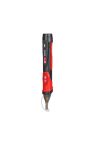
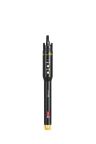
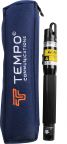
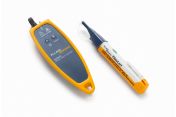
- Visual Fault Locator (VFL): Use this for quick continuity and break detection. It’s ideal for short-range fault finding by injecting a visible red light into the fiber so you can see bends, breaks or improper terminations.
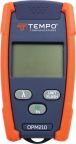
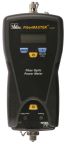
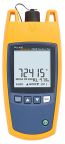
- Optical Power Meter (OPM): This tool measures absolute optical power (in dBm) and, when paired with a light source tester, helps calculate insertion loss (in dB).
- Light Source / Fiber Light Source Tester: Provides a stable light output at the required wavelengths to pair with an OPM for loss testing.
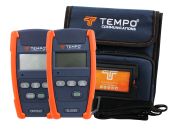
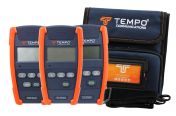
- Optical Loss Test Set (OLTS): A standards-based two-ended test kit (source + meter) used for certification (often called Tier 1) of fiber links, giving pass/fail results according to industry norms.
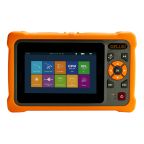
- OTDR (Optical Time Domain Reflectometer): This one-ended instrument sends pulses and analyzes backscatter/reflections to characterize the link, mapping splice/connector events, reflectance, and length (Tier 2).
- End-face Inspection Microscope/Probe: Used for checking, in compliance with IEC standards, the cleanliness and defect status of fiber end-faces. Dirty or damaged end-faces cause high reflectance losses.
- PON/FTTH Power Meter: Designed for live networks such as GPON/EPON, this tool supports both downstream and upstream split wavelengths, making it useful for service-provider FTTH environments.
Where Would You Use a Fiber Optic Tester?
Here’s how a fiber optic tester fits into different environments and tasks:
- Enterprise LAN & Campus: Used for certification and troubleshooting of backbone and access fibers, ensuring connectivity and performance standards are met.
- Data Centers: Ideal for low-loss verification of high-density LC/MPO links, as well as move/add/change checks and ensuring every link meets strict insertion-loss metrics.
- Telecom & Backhaul: Employed for OTDR characterization and span qualification across metro and long-haul links, locating faults and validating distances.
- FTTH/FTTx: Used for PON power and loss testing from OLT to ONT and drop-fiber verification, essential for subscriber-side fiber networks.
- Industrial & Transportation: Ruggedized fiber testers deployed to validate plant networks and trackside links, where reliability under harsh conditions is critical.
How to Choose the Right Fiber Tester?
Consider the following factors for selecting the correct fiber optic tester:
- Network Type & Task: Identify whether you need a fiber tester for certification (e.g., a two-ended OLTS), characterization (e.g., an OTDR), or quick checks (like a VFL or OPM). Choose the tool that suits your typical task.
- Fiber & Wavelengths: Make sure the tester supports the fiber type you’re working with—single-mode (typically 1310/1550/1650 nm) or multimode (850/1300 nm). Also, check whether the light source uses an LED or a laser.
- Performance Needs: Look at specs such as dynamic range (especially on OTDRs), measurement accuracy, linearity, resolution, and event dead zones. These impact how reliably you detect events and faults.
- Connectors & Interfaces: Ensure compatibility with connectors such as SC/LC/FC/ST, and if you’re working with MPO systems, make sure your fiber tester supports them. Also include the right reference/test leads.
- Reporting & Standards: Verify that the unit supports industry standards (TIA/ISO/IEC), provides Pass/Fail reporting, and exports results (PDF/CSV) for documentation and certification.
- Ruggedness & Battery: For field use, assess drop rating, IP (ingress protection) rating, operating temperature range, and whether the battery is easily replaceable.
- Budget & Ownership Costs: Balance required features with cost; don’t overpay for advanced capabilities you won’t use, and allocate budget for accessories, calibration, and leads.
Essential Accessories
A well-rounded testing setup requires several accessories that ensure accuracy and reliability in the field:
- Reference/Test Leads & Launch/Receive Fibers: Choose the correct length and type (SM/MM, LC/SC/MPO) to match both your fiber tester and network requirements.
- Cleaning Kits: Include sticks, cassettes, and cleaning fluids to maintain end-face cleanliness and prevent contamination-related failures.
- Attenuators & Adapters: Useful for protecting receivers during live-link testing and for mating different connector types.
- Carry Cases & Protection: Rugged cases, dust caps, spare batteries, and chargers help keep your fiber testing equipment safe and ready for field use.
Why Choose RS for a Fiber Optic Tester?
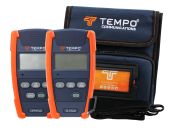
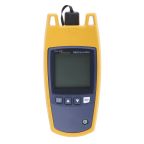
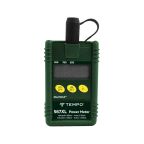
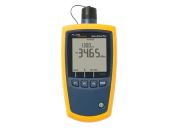
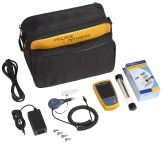
RS offers a wide range of fiber optic testers in stock, from VFLs to OLTS and OTDR kits, along with fiber light source tester options to suit different project needs. Our selection includes leading brands such as Fluke, Tempo, TREND Networks and more, all supported by full datasheets and standards-aligned specifications.
You can also rely on our technical advisors for guidance on wavelengths, connectors, and reference methods, ensuring you choose the right tool for your application. Moreover, you can also shop for other useful equipment such as durometers, temperature transmitters, and more.
With fast local delivery of fiber optic testers in the Philippines and clear prices, we make procurement straightforward. For more information related to delivery, refer to the delivery page.

Popular Searches
Related links
- TREND Networks Cable for Fiber Optic Testers, R240-VIP
- Fibre Optic Cable
- TREND Networks Cable for Fiber Optic Testers, R240-ML-SCST
- TREND Networks Cable for Fiber Optic Testers, R240-ML-SCSC
- TREND Networks Cable for Fiber Optic Testers, R240-ML-SCLC
- TREND Networks Cable for Fiber Optic Testers, R240-SL-SCSC-A
- TREND Networks Cable for Fiber Optic Testers, R240-SL-SCST
- TREND Networks Cable for Fiber Optic Testers, R240-SL-SCLC