Identification Sensors
Identification sensors play a vital role across a broad range of domestic and industrial applications that require reliable object detection and identification. These systems utilize various detection technologies, including Radio Frequency Identification (RFID), infrared, and barcode scanning, to detect and identify objects from various distances. Increasingly integrated into automation processes, identification sensors enhance inventory management, strengthen access management protocols, and bolster overall security and operational efficiency.
RS Philippines offers an extensive range of high-quality identification sensors, including robust RFID readers, durable tags, and reliable transponders, to meet your specific needs. Explore our ID sensor selection designed to bring efficiency and precise control to your operations.
How Identification Sensors Work
ID sensors operate by employing various detection technologies to automatically identify and track objects.
RFID Technology
Radio Frequency Identification (RFID) is a primary identification method that uses radio waves to communicate between a reader and a tag. RFID systems operate across three main frequency bands:
- Low Frequency (LF, ~125 kHz): Short read ranges, good near metals and liquids.
- High Frequency (HF, 13.56 MHz): Moderate range, widely used in access control and payment systems.
- Ultra High Frequency (UHF, 860–960 MHz): Long read ranges, suitable for large-scale inventory and logistics.
An RFID system consists of an RFID reader (transceiver) and a tag (transponder). The reader emits an electromagnetic pulse that powers the tag, which then transmits its unique data back to the reader wirelessly. This hands-free technology enables fast, accurate identification without line-of-sight requirements.
Barcode Scanning
Beyond RFID, other ID sensor types function as barcode readers. These systems work by using a light source, typically a red LED or laser, to illuminate the barcode's pattern of dark bars and light spaces. A sensor within the barcode reader then detects the variations in reflected light intensity. This reflected light is converted into an electrical signal, which is then sent to a decoder. The decoder interprets this pattern, translating it into the alphanumeric data encoded within the barcode, which can then be transmitted to a computer system for processing. Barcode scanning requires line-of-sight but offers a simple, cost-effective identification method widely used in retail and logistics.
Infrared Sensors
Infrared identification sensors detect the presence or motion of objects by emitting and receiving infrared radiation. These are commonly used in security systems and automation to detect movement or presence rather than unique object identification.
Transceivers/Transponders
These devices enable two-way communication within identification systems, facilitating complex tracking, access control, and data exchange applications.
Types of Identification Sensors
There are several types of sensor technology available at RS Philippines with different functions. Some of which include:
- RFID Readers: Can be used for large-scale scanning and precise object tracking in manufacturing, industrial, and logistics environments.
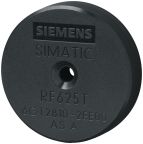
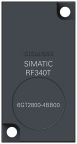
- RFID Tags: Small electronic devices attached to objects containing unique data, enabling wireless, hands-free identification using an RFID reader. Tags come in passive, active, and semi-active types depending on power source and read range.
- Barcode Readers: As optical ID scanners, these devices efficiently read encoded information from barcodes, making them indispensable for rapid item identification in retail and logistics.
- Infrared Sensors: These sensors detect motion or presence by emitting and receiving infrared radiation within a radius and are commonly utilized in security systems and automation.
- Transceivers/Transponders: These devices facilitate bidirectional data transmission, enabling two-way communication within identification systems, often integral to more complex tracking and access solutions.
Why Use Identification Sensors
Implementing identification sensors offers significant advantages across diverse sectors:
- Improved Inventory Visibility & Traceability: Enhance your ability to monitor stock levels and movement with precision, reducing losses and optimizing supply chains.
- Automated Real-Time Asset Tracking: Ensure you always know the location of valuable equipment or products, streamlining operations.
- Enable Secure Access Control: Utilize an ID sensor or other identification systems for meticulous management of entry and exit points, bolstering security.
- Reduce Manual Verification Errors: By automating identification tasks, these sensors significantly decrease human errors, leading to more accurate data and streamlined workflows.
- Broad Industry Applicability: These identification sensors are invaluable across various sectors, including retail, logistics, healthcare, education, and many more.
From RFID sensors to barcode scanners, browse our range of identification sensors and order today for efficient delivery in the Philippines, unlocking improved operational control and peace of mind.
How to Choose the Right ID Sensor
By carefully evaluating these points, you can confidently buy ID sensor solutions that precisely meet your operational demands.
- Frequency Range: For RFID applications, there are different frequencies to choose from. LF and HF are generally better for shorter read ranges and applications near metals or liquids, while UHF offers higher read ranges and can track multiple objects, perfect for warehouse and logistics tracking.
- Read Range: Determine the necessary distance for detection. Options vary from short-range sensors ideal for precise, close proximity scanning to long-range capabilities required for extensive asset tracking or warehouse inventory.
- Environment: Assess your operating conditions to know the sensor's IP protection rating and material durability required.
- Form Factor: Choices include handheld ID scanners for mobile applications, panel-mount designs for fixed installations, or embedded sensors for discreet integration within machinery.
- Compatibility: Ensure the chosen RFID reader or other ID sensor is fully compatible with the specific tag types you plan to use, as well as with your existing software and control systems for seamless data integration.
Why Buy ID Sensors from RS Philippines
For customers across the Philippines looking to buy dependable ID sensors, RS Philippines delivers both variety and value. Our catalogue includes everything from compact RFID readers and secure transponders to versatile barcode scanners, all sourced from respected global brands, including Omron, SICK, and Siemens. On top of that, we also carry other equipment and tools for your application, such as automated signals, commercial safety mats, and more.
Whether your application lies in warehouse automation, retail systems, or access control, we provide solutions that match your technical and budgetary needs.
With a focus on competitive pricing, consistent stock levels, and nationwide delivery, RS Philippines ensures a seamless procurement process for your ID sensor needs and more. Trust us to supply and deliver components that support system integrity and long-term reliability. To know more about our delivery service and fees, visit our Delivery page.