Sensor & Actuator Cables
RS Philippines offers a comprehensive range of sensor and actuator cables designed for reliable transmission of signals, data, and low-voltage power in automated systems. These cables are critical to ensuring precise performance and uninterrupted operation in modern industrial environments. Whether you’re wiring sensors in a control panel or connecting actuators in a robotic assembly line, RS provides durable, high-quality options suited for demanding applications.
What Are Sensor and Actuator Cables Used For?
Sensor and actuator cables are essential components in industrial automation systems. Sensor wires carry data from field sensors to controllers, enabling accurate monitoring and real-time decision-making. On the other end, actuator wires deliver control signals from PLCs or control systems to devices like motors, valves, or solenoids, triggering mechanical or electrical responses.
These cables play a vital role in maintaining operational uptime and safety. In high-speed production environments, precise signal transmission ensures machines respond instantly to input, helping prevent errors or delays.
Features of Industrial Sensor Cables
When selecting sensor or actuator cables for industrial use, it’s essential to evaluate performance features based on your operational environment and application type. These are the factors to consider:
Sheath Materials
Sensor cables are available with different outer sheath materials, each tailored to specific industrial needs. There are three common types available: PUR, POC, and PVC sheath cables.
- PVC (Polyvinyl Chloride): A cost-effective, general-purpose sheath suitable for standard applications with minimal exposure to harsh elements.
- PUR (Polyurethane): Offer excellent resistance to abrasion, oils, and chemicals, making them ideal for dynamic and high-motion environments, such as robotic arms and conveyor systems.
- POC (Polyolefin Compound): Specifically designed for use in welding areas, where resistance to sparks and high temperatures is essential.
IP Ratings
Many actuator sensor cables in the Philippines are rated IP20 or higher, offering excellent protection against dust and water ingress. This rating ensures that your cables remain functional even in wet or washdown-prone areas, like food processing facilities or outdoor installations.
Shielding
Electromagnetic interference (EMI) can disrupt sensitive signal transmission. Shielded sensor cables help maintain data integrity in electrically noisy environments such as manufacturing floors with motors, drives, and high-voltage equipment.
Flexibility
For dynamic applications involving movement, such as robotic arms, conveyors, or automated tools, cable flexibility is crucial. Flexible actuator cables reduce wear and tear, prevent internal conductor breakage, and ensure a longer service life in motion-intensive systems.
Sensor Cable Connectors and Sizes
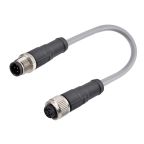
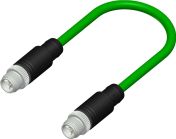
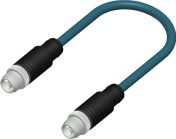
Sensor and actuator cables typically come with pre-installed connectors or are terminated in the field using compatible connector systems. Understanding connector types and sizing ensures proper fit and performance:
Connector Types (M5, M8, M12, M23)
There are various types of connectors for a range of sensor and actuator cables. The most commonly used are the M8 and M12 connectors, offering compact size and high reliability. On the other hand, M5 is suitable for ultra-compact applications, while M23 supports power-heavy tasks or multi-pin configurations.
Pole Configurations (3P, 4P, 5P)
These refer to the number of contacts inside the connector. 3-pole connectors are typically used for simple sensors or devices requiring basic connections.
4-pole and 5-pole connectors accommodate additional data or power lines, offering expanded functionality.
Connector Orientation
The connector’s physical layout affects how cables are routed in tight or complex spaces.
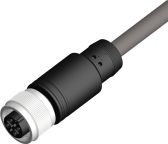
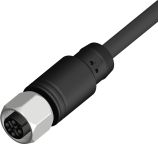
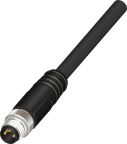
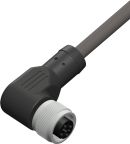
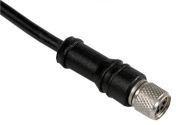
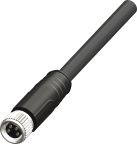
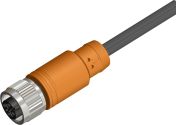
- Straight: Suitable for straightforward cable routing.
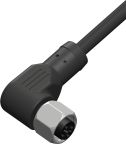
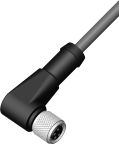
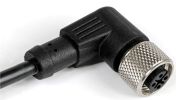
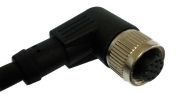
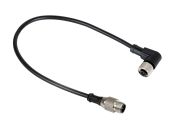
- Angled: Angled connectors are ideal for cramped control panels or machines where vertical clearance is limited.
CSA (Cross-Sectional Area)
The cable’s CSA impacts both its current-carrying capacity and flexibility. Smaller CSA cables are more flexible and suited for signal transmission, while larger CSA sizes are needed for actuator loads.
How to Choose Sensor and Actuator Cables
Choosing the right sensor and actuator cable is critical to the reliability and performance of any industrial automation system. Some key factors to consider when selecting the best solution for your needs:
Cable Type: Pre-assembled vs. Field-Wired
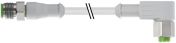
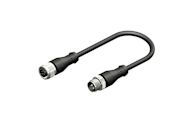
- Pre-Assembled Cables: Factory-fitted connectors and standard lengths allow for quick installation and reliable performance in systems with consistent layouts.
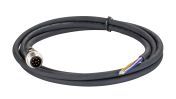
- Field-Wired Cables: Offer flexibility for custom lengths and connector types, suitable for tailored or complex configurations.
Connector Compatibility
Most industrial sensors and actuator cables use standardized connectors such as M8, M12, M5, or M23, with varying pole configurations (e.g., 3-pole, 4-pole, 5-pole). Always verify compatibility between the cable connector and the device port to avoid mismatches, as these can result in signal loss, unreliable operation, or even damage to equipment. For robust operation, ensure correct mating type (male/female), contact configuration, and locking mechanism.
Environmental Resistance
Industrial environments often expose cables to harsh conditions such as moisture, oil, vibration, and chemicals. Select cables with sheath materials and IP ratings suited to your environment to maximize lifespan and reliability.
Flexibility & Shielding
It’s also important to consider the flexibility and shielding of each wire. For applications involving constant motion, highly flexible cables are required to withstand repeated bending without fatigue.
Additionally, environments with high electromagnetic interference (EMI), such as those near motors or drives, demand shielded cables to maintain signal integrity.
Industrial Applications for Sensor and Actuator Cables
Sensor and actuator cables are used across a wide range of industries, where real-time data, machine control, and environmental resilience are critical. Some of their applications include:
Automotive and Machinery Manufacturing
In automated production lines, these cables connect sensors to controllers, enabling real-time feedback for robotic arms, safety systems, and programmable logic controllers (PLCs). They’re also used in limit switches, encoders, and motion control systems.
Food and Pharmaceutical Processing
Hygienic environments require cables that can withstand frequent washdowns, high humidity, and chemical exposure. Sensor and actuator cables ensure accurate control and signal transmission in dosing systems, packaging lines, and inspection equipment.
Warehousing and Institutional Facilities
From automated conveyor belts to environmental monitoring systems, these cables enable seamless communication between control units and field devices in logistics centers and data facilities.
Buy Sensor and Actuator Cables in the Philippines
If you’re looking to buy sensor and actuator cables, RS offers a varied selection of industrial-grade solutions, all available for fast delivery across the Philippines. Whether you need a pre-assembled cable, a custom field-wired setup, or connectors and accessories, we have you covered.
As a leading sensor and actuator cable supplier in the Philippines, RS provides top-tier brands such as Phoenix Contact, SICK, Lumberg Automation, and more. Aside from sensor and actuator cables, we also offer power cables, float switches and more.
Shop with confidence and keep your automation systems running at peak performance.