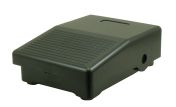
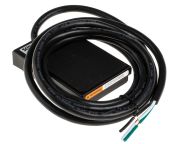
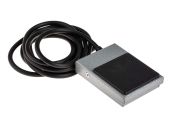
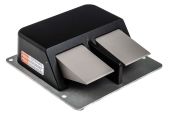
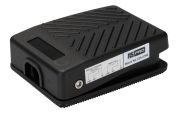
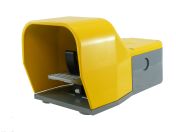
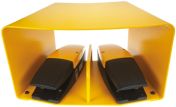
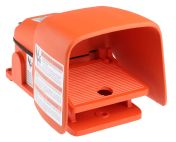
Foot Switches
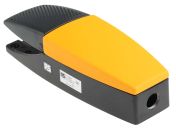
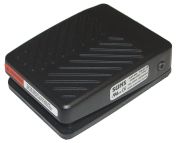
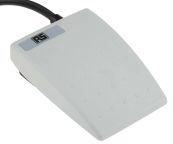
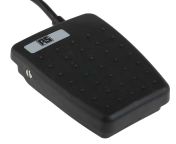
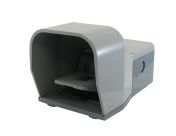
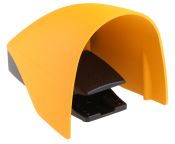
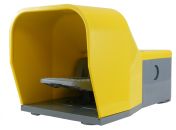
Foot switches, also known as pedal switches, foot pedal switches, or electric foot switches, are hands-free control devices used to operate machinery, tools, instruments, and safety circuits. These switches range from compact pedals for light equipment to heavy-duty industrial foot switch models, with options that include guarded and emergency-stop variants for enhanced safety.
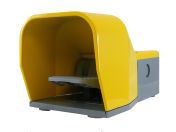
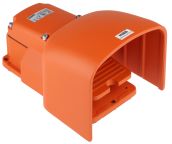
Some foot switches come with guard covers and feature various cable lengths, colors, and contact configurations to meet different operational requirements. Emergency-stop foot switches are specifically designed for industrial settings to prevent injury, quickly breaking a circuit, and stopping machinery when pressed.
What is a Foot Switch?
A foot switch is a pedal-activated electrical control that lets users operate a machine or circuit with their foot, freeing up both hands to stay on task, whether that’s machining, sewing, medical procedures, or other activities. By stepping on the pedal, the internal mechanism actuates electrical contacts (such as SPST, SPDT, or DPDT configurations) to start/stop, change mode, or control functions without hand interaction.
Foot switches are built with a pedal or actuator, a mechanical plunger or sensor, and robust electrical contacts housed in a durable casing, often with an anti-slip base or protective guard to prevent accidental operation. They are available in different action styles: momentary (“spring-return”) where the switch is active only while pressed, and maintained (“latching”) where a single press toggles ON or OFF to suit a range of operational needs.
How Do Foot Switches Work?
Foot switches operate by translating foot-press motion into a change in electrical contact state, letting users control circuits hands-free in a variety of applications:
- Contact Actuation: When the pedal is pressed by foot, a mechanical plunger or similar mechanism moves the internal contacts (normally open or normally closed), either completing or breaking the circuit to start or stop the connected device. The basic “make or break” action is the foundation of how these switches function.
- Momentary vs. Latching: Momentary foot switches only activate the circuit while the pedal is pressed and return to their default state when released, which is useful for temporary actions. Latching (or maintained) foot switches toggle the circuit ON or OFF with successive presses, and the state stays until pressed again.
- Electrical Interface: Foot switches are specified by voltage and current ratings and contact form (e.g., SPST, SPDT, DPDT). Some advanced models use solid-state or analog components to support speed or position control and longer life.
- Pneumatic Option: In environments where electrical isolation or hygiene is critical, pneumatic foot bellows create air pressure with a foot press that triggers a remote switch, providing an alternative to direct electrical actuation.
Types of Foot Switches
Foot switches come in a variety of configurations to match different operational needs and environments:
- Momentary (Pedal) Foot Switches: These foot switches activate only while the pedal is pressed and are ideal for press-to-run tools, cutters, microscopes, and other equipment where temporary control is needed.
- Maintained / Latching Foot Switches: These latch in position with each press, making them useful as ON/OFF foot switches for lights or enabling functions where continuous operation is required.
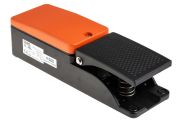
- Guarded / Safety Pedals: Guarded or shrouded pedals have protective housings that reduce the risk of accidental activation, particularly in industrial environments where unintentional operation could create hazards.
- Single / Dual / Multi-Pedal Assemblies: Multiple pedals allow control of several functions (e.g., run/jog/reverse) in one assembly, dual or twin versions can increase efficiency.
- Heavy-Duty Industrial Foot Switches: Built with reinforced housings and higher current ratings for heavy-duty industrial applications, these foot switches often feature robust metal cases and IP protection.
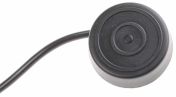
- Pneumatic / Bellows-Operated Options: Pneumatic or bellows-operated pedals use air pressure for control where electrical isolation or hygiene is essential.
- Analog / Variable Foot Pedals: These use potentiometers or sensor-based feedback to provide speed or position control for motor drives and variable functions.
How Do Emergency-Stop Foot Switches Work?
Emergency-stop foot switches are intended for situations where an operator must stop machinery quickly using their foot. Pressing the pedal fully trips the safety circuit using positive-opening NC contacts, immediately breaking the flow of current to the equipment. These switches maintain the stop state until a deliberate manual reset is performed, ensuring the machinery cannot restart accidentally.
To prevent unintended activation, many models feature oversized shrouds or hoods and require higher pedal force, reducing nuisance trips. For proper operation, emergency stop foot switches are wired to a safety relay or PLC, and it is important to verify the required category and performance level according to site safety rules.
Types of Emergency-Stop Foot Switches
Emergency-stop foot switches may differ by guarded vs. unguarded designs, with guarded pedals recommended for high-risk areas and unguarded models used only where appropriate. They also vary by contact sets, typically 1NC or 2NC safety contacts, with optional auxiliary NO contacts for status signaling.
Housing and material can range from metal to polymer, with different IP ratings, impact resistance, and voltage/current ratings depending on the application. Additionally, foot switches may be single or dual pedal, with one pedal dedicated to emergency stop and another for enable/run functions in combined assemblies.
What Are Foot Switch Bellows?
Foot switch bellows are a rubber or PU air bulb with tubing that actuates a remote pneumatic or electric switch via air pressure. When the pedal is compressed, air travels through the tubing to the switch element, expanding a remote bellows that operates the electrical contacts. This design provides complete electrical isolation at the foot, making it ideal for wet or hazardous environments.
Foot switch bellows are commonly used in medical and dental settings, laboratories, food processing, and wash-down areas, where electricity at the pedal would be unsafe. Key advantages include electrical isolation, easy cleaning, and the ability to position the control switch at a distance from the pedal using long tubing runs, enhancing safety and operational flexibility.
Applications
Foot switches are used in many settings where hands-free control improves safety, efficiency, and workflow:
- Industrial Machinery: Operators in the Philippines use foot switches on presses, shears, bending machines, and conveyors so they can keep both hands on the workpiece while controlling industrial machine functions with their foot.
- Sewing/Textiles and Woodworking: In textile manufacturing and woodworking, pedals provide speed and run control while the user guides material or tools, enhancing precision and comfort.
- Medical and Labs: Foot switches support hands-free operation of imaging equipment, microscopes, sterilizers, and other lab tools; pneumatic or sealed pedals are often preferred in sterile or wet environments to reduce contamination risk.
- Assembly and Test Benches: On assembly lines and test benches, pedals allow start/stop, jog, and indexing control without reaching for panel buttons, speeding up repetitive tasks.
- Stage/AV and Workshops: In stage, audio/visual setups, and general workshops, foot switches control lighting, effects, and tool on/off functions while keeping hands free for critical adjustments.
How to Choose the Right Foot Switch?
Picking the right foot switch starts with understanding how and where you’ll use it, as well as the electrical and safety requirements of your application:
- Function and Action: Decide between momentary and latching foot switch based on control needs, and confirm the required contact form and logic for your circuit.
- Electrical Rating: Match the voltage and current ratings to your equipment and duty cycle; for motor drives or devices with inrush loads, choose switches with ratings that exceed your expected load.
- Safety and Guarding: If accidental activation is a concern, look for guarded pedals, emergency-stop options, or interlock features, and consider how the foot switch resets.
- Environment: Verify the IP rating and housing material of the foot switch for dust, moisture, temperature extremes, or wash-down areas; heavy-duty housings are essential in harsh industrial sites.
- Ergonomics: Evaluate pedal size, actuation force, non-slip base, and mounting options to ensure comfortable, stable use.
- Connectivity: Consider cable length, entry points, and connector type, and include strain relief where needed.
- Compliance and Accessories: Check compatibility with boots, bellows, guards, and safety relays, and ensure necessary standards and certifications are met.
- Budget and Availability: Compare foot switch prices and verify local stock in the Philippines before you buy to avoid delays and fit your timeline.
Features and Benefits
Foot switches offer clear, tangible advantages that improve workflow, safety, and durability across many environments:
- Hands-Free Productivity: By enabling control with the foot, operators can keep both hands on the workpiece or task at hand, boosting efficiency and reducing cycle times in processes like welding, assembly, and machining. This hands-free design enhances work continuity and speeds up operations.
- Improved Safety: Foot switches help keep hands clear of hazardous areas and controls. Guarded pedals and emergency-stop options further reduce the risk of accidental activation or injury, making them a safer choice for industrial and workshop environments.
- Durability: Many foot switches feature reinforced housings, robust metal guards, sealed boots, and dust-proof or waterproof designs, ensuring long service life even when used for heavy-duty applications.
- Modularity: Options range from single to multi-pedal layouts, analog/variable controls, and retrofit pneumatic bellows, offering flexibility to match specific operational needs.
Installation and Use Tips
To get reliable, installing and using foot switch correctly is important:
- Secure Mounting: Attach the foot switch to a stable floor plate or use anti-slip mats to prevent movement during operation. Route electrical cables neatly and away from walkways to avoid trip hazards and inadvertent stress on wiring.
- Electrical Safety: Always install or wire the switch with the power off and protect circuits with appropriate fuses or relays. Before live operation, test the contact actuation to confirm correct behavior and secure connections.
- For E-stops: If used as an emergency stop control, wire the foot switch through a safety relay or PLC and verify that the contacts are positive-opening. Regular function tests help ensure reliable emergency performance when needed.
- Environmental Care: In wet, dusty, or harsh areas, use protective boots or bellows on the foot pedal switch and inspect seals periodically to maintain ingress protection and long-term durability.
Why Buy Foot Switches from RS Philippines?
Need reliable foot switches for industrial, medical, or workshop use in the Philippines? RS offers a comprehensive range of momentary, latching, guarded/E-stop, heavy-duty, pneumatic/bellows, and analog foot pedals from trusted brands like Schneider Electric, Bernstein AG, and Schmersal. Alongside this, detailed datasheets, wiring information, and expert technical support make it easier to select the correct current rating, IP protection, and guard configuration.
Our transparent prices, real-time stock visibility, and fast delivery in the Philippines help keep your projects on schedule. Browse our full range today of foot switches, rotary switch handles, safety curtain sensors and buy all the components you need in one convenient order. For delivery timelines and charges, refer to the delivery page.