DC-DC Converters
DC-to-DC converters are electronic devices that convert direct current (DC) from one voltage level to another by temporarily storing and releasing electrical energy. They play a critical role in ensuring that sensitive electronic circuits receive the correct voltage required for safe, reliable, and efficient operation. By efficiently managing voltage levels in power supplies, DC-DC converters help optimize power consumption and extend battery life in portable devices.
Why Choose DC-DC Converters?
DC-DC converters offer several advantages that make them indispensable across consumer, industrial, and specialized electronics.
- Energy Efficiency: They regulate voltage with minimal energy loss, improving overall system efficiency and reducing heat generation.
- Compact Size: Designed to be small and lightweight, they fit easily into space-constrained applications such as portable electronics and embedded systems.
- Voltage Flexibility: They enable devices to operate from various power sources by converting input voltages to the required output levels.
- Isolation Options: Available in isolated and non-isolated types, DC-DC converters allow designers to choose based on safety, noise immunity, and application requirements.
- Wide Application Range: From low-power battery-operated gadgets to high-power industrial equipment, DC-DC converters provide scalable solutions.
Where DC-DC Converters Are Used
DC-DC converters are widely used in various Philippine industries, including:
- Automotive Systems: In electric vehicles (EVs) and conventional cars, DC-DC converters regulate power for infotainment systems, sensors, and control units. This, in turn, helps in reducing battery load and improving fuel efficiency.
- Telecommunications and Networking: Routers, base stations, and communication towers rely on stable power supplies, and DC-DC converters ensure consistent voltage for these critical components.
- Industrial Automation: Machines and control systems in factories require robust and efficient DC power conversion to ensure reliability and uptime.
- Consumer Electronics: Devices like smartphones, tablets, and laptops use compact DC-DC converters to regulate voltage for internal components.
- Medical Devices: Life-support and diagnostic equipment need stable, noise-free DC power, which isolated DC-DC converters provide to ensure patient safety and device accuracy.
DC-DC Converter Output & Isolation Types
DC-DC converters are available in both isolated and non-isolated types, which are suitable for different applications and environments.
Isolated DC-DC converters include an electrical isolation barrier between the input and output. This helps prevent ground loops, reduce voltage spikes, and minimize electrical noise and radio frequency interference (RFI), making them ideal for sensitive or safety-critical systems.
Non-isolated DC-DC converters, in contrast, do not include an isolation barrier. While they do not offer the same level of protection against electrical noise or surges, they are more compact, affordable, and efficient in space-constrained applications. Suitable for systems where isolation is not required, such as simple voltage step-down or step-up tasks within a single circuit.
Module Formats and Packages
DC-DC converters are available in various module types to suit different applications:
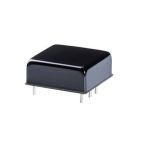
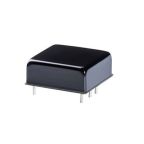
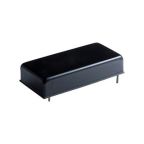
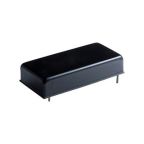
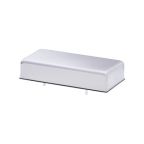
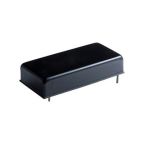
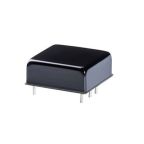
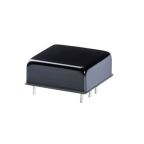
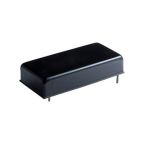
- DIP16, DIP24 (Dual Inline Package): Common in compact PCBs, easy to handle and solder.
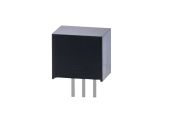
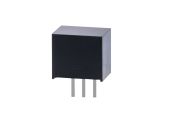
- SIP (Single Inline Package): Ideal for vertical mounting and space-saving designs.
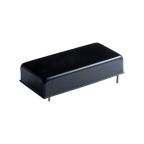
- Encapsulated Modules: Provide environmental protection against dust, moisture, and mechanical stress, suitable for harsh industrial conditions.
- Full and Half Brick Modules: Designed for high-power applications with standardized footprints for easy integration into power platforms.
Mounting Options for DC-DC Converters
To accommodate diverse applications and installation environments, DC-DC converters offer multiple mounting options:
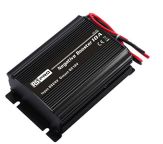
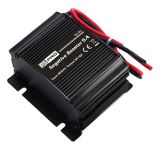
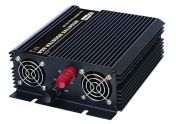
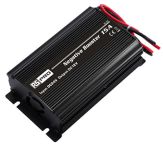
- Chassis mount
- DIN Rail mount
- Flange mount
- PCB mount
- Rackmount
- Surface mount
- Through-hole
Choosing the appropriate mounting style ensures mechanical stability and optimal thermal management.
Key Benefits of Isolated DC-DC Converters
Isolated DC-DC converters offer distinct advantages that make them essential in high-reliability and safety-sensitive applications. These include:
- Compliance with International Safety Standards: Isolated converters are engineered to meet rigorous global safety certifications. This compliance is vital for regulated industries like medical, aerospace, and industrial automation.
- Enhanced Safety for Users and Equipment: By electrically isolating the input from the output, isolated DC-DC converters minimize the risk of electric shock and protect downstream components from high-voltage faults or surges.
- Noise Reduction and Signal Integrity: Electrical isolation helps prevent the formation of ground loops and minimizes the transmission of electrical noise and radio frequency interference (RFI).
- High Efficiency and Broad Voltage Range: Isolated DC-DC converters support a wide input and output voltage range while maintaining high efficiency. This makes them suitable for converting power in energy-demanding setups.
How to Choose the Right DC-DC Converter
Selecting the appropriate DC-DC converter for your application involves careful consideration of several key parameters, including:
- Input Voltage: The input voltage is determined by the device's , such as batteries. It’s crucial to select a DC-DC converter that can reliably regulate a range of input voltages, such as 12V or 5V, to ensure stable operation and prevent potential failure.
- Output Voltage: DC-DC converters are available with either fixed or adjustable output voltage options. Choosing the correct output voltage is essential to ensure stable and reliable device performance. Fixed-output converters are ideal for applications that require a constant voltage level, while adjustable-output converters provide greater flexibility, making them well-suited for projects that may need different voltage levels across various use cases.
- Output Current: Together with output voltage, output current determines the total power the converter can supply. As such, it’s important to select a converter that can consistently deliver the necessary current to the load without exceeding its rated capacity.
- Size and Mounting Options: Converters come in various form factors and mounting styles to accommodate different design needs. Therefore, it’s important to choose the size and mounting option based on your requirements. For example, PCBs may require surface-mount or through-hole mounting, SIP or DIP.
- Isolation Requirements: Determine if electrical isolation is necessary for safety, noise immunity, or regulatory compliance.
- Efficiency: Higher efficiency reduces heat dissipation and power loss, critical for battery-powered and high-density systems.
- Product Lifecycle and Availability: It's also critical to consider long-term product availability. Selecting components that are actively supported by the manufacturer helps reduce the risk of obsolescence.
Buy DC-DC Converters Online in the Philippines
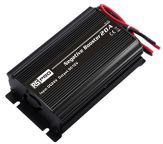
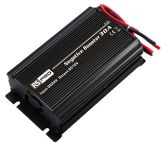
RS is a trusted DC-DC converter supplier in the Philippines, offering a selection of high-quality products from industry-leading brands like XP Power, Recom, Murata Power Solutions, and our very own RS PRO.
When you choose RS Philippines, you benefit from fast local delivery, competitive pricing, and expert customer support. Our online platform makes it easy to compare models based on input/output voltage, efficiency, form factor, and more so you can quickly find the right DC-DC converter for your project. For more details on delivery services and fees, please refer to our delivery page.
Popular Searches
Related links
- DC-DC Converters ICs
- RS PRO DC/DC Converter 32V dc Input 60 °C Max Temp 20 °C Min Temp
- XP Power F DC/DC Converter 12V dc Input Through Hole 70 °C Max Temp -10 °C Min
- MEAN WELL MD DC/DC Converter 75V dc Input DIN Rail
- MEAN WELL SD-50 DC/DC Converter 24V dc Input 2.1 A Chassis, 60 °C Max Temp -10 °C Min Temp
- STMicroelectronics DC-DC Resonant LLC Converter DC to DC Converter Development Board EVLG599-250WLLC
- STMicroelectronics DC to DC Converter Evaluation Board STEVAL-0606YADJ
- Texas Instruments PTH05060W Non-Isolated DC-DC Converter 5.5V dc Input 85 °C Max