Air Quality Monitors
Whether you are working in a laboratory, factory, office, or simply want to ensure your home is free from pollutants, air quality monitors (also called air quality meters, air quality testers, or air quality detectors) are essential tools for continuously tracking indoor or outdoor air pollutants and environmental parameters. These instruments help protect health, maintain comfort, and support compliance with air quality standards.
Air quality monitors are available in a range of formats, from portable units for spot checks to networked monitoring systems that provide comprehensive coverage across facilities, campuses, or large public spaces. Many models offer real-time alerts when pollutant levels reach unsafe thresholds, while others can log data for analysis on a computer or cloud dashboard, ensuring that potentially harmful conditions are detected promptly and acted upon to minimize health risks.
What Is an Air Quality Monitor?
An air quality monitor is a device that senses and reports the concentration of airborne pollutants and environmental comfort metrics either in real time or at set intervals, helping you understand the quality of the air you’re breathing.
These monitors are used to identify sources of pollution, optimize ventilation and filtration strategies, and document indoor air quality (IAQ) compliance in workplaces, schools, laboratories, and public spaces where occupant health and comfort matter most.
Air quality monitors come in several forms to suit different needs: handheld or portable units for spot checks, wall‑ or desk‑mounted indoor monitors for ongoing building IAQ tracking, outdoor‑rated monitors for environmental observation, and multi‑point systems for comprehensive coverage across larger facilities.
How Do Air Quality Monitors Work?
Air quality monitors detect and report airborne conditions using a range of specialized sensors and intelligent data handling systems. Key monitoring methods include electrochemical sensors for gases such as carbon monoxide or nitrogen dioxide, NDIR (non‑dispersive infrared) sensors for measuring carbon dioxide, and laser scattering or optical sensors for particulate matter like PM2.5 and PM10.
Additionally, metal‑oxide semiconductor (MOS) sensors detect volatile organic compounds (VOCs), while integrated sensors monitor temperature, humidity, and pressure to provide a complete picture of indoor air quality.
- Sensing Technologies: Each sensor type operates on a defined physical or chemical principle, such as infrared absorption for CO₂ or light scattering for particulate matter, and is designed to detect specific target pollutants.
- Data Handling: Monitors typically feature a local display and may log data or connect via USB, Wi‑Fi, or industrial protocols (e.g., BACnet/Modbus) to cloud dashboards or building systems for deeper analysis.
- Alerts & Control: Many units support threshold alarms and output signals (relays/APIs) that can trigger fans, filters, or adjustments to HVAC and building management systems in response to poor air quality readings.
What Do Air Quality Monitors Measure?
Air quality monitors track a variety of parameters to help protect health, maintain comfort, and manage indoor air quality effectively.
- Particulate Matter (PM): Air quality meters measure PM1.0, PM2.5, and PM10 from dust, smoke, combustion, and other processes, providing insight into airborne particles that can affect respiratory health.
- Gases: They detect carbon dioxide (CO₂) as a ventilation indicator, as well as carbon monoxide (CO), ozone (O₃), nitrogen dioxide (NO₂), sulfur dioxide (SO₂), hydrogen sulfide (H₂S), and total volatile organic compounds (TVOCs), depending on the model.
- Comfort and Environment: They monitor temperature, relative humidity, and barometric pressure, with some devices also tracking light and noise for broader indoor environmental quality insights.
- Indices and Scoring: Certain monitors calculate the Air Quality Index (AQI) or custom IAQ scores, enabling quick and easy interpretation of overall air quality at a glance.
Types of Air Quality Monitors
Air quality monitors are available in different formats and configurations to suit everything from quick inspections to long-term, facility-wide monitoring.
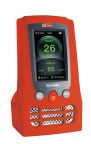
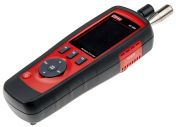
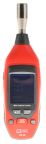
- Portable Air Quality Monitors: Handheld or battery-powered units that are compact and easy to transport. They are ideal for spot checks, diagnostics, audits, and on-site work, allowing engineers to deploy them quickly and store results for later analysis.
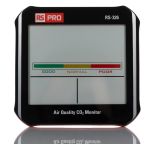
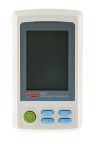
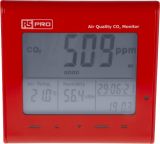
- Fixed Indoor Monitors: Wall- or desk-mounted devices designed for continuous indoor air quality (IAQ) monitoring in offices, schools, hospitals, and laboratories. These monitors are typically mains-powered and provide ongoing visibility of air conditions.
- Outdoor Air Quality Monitors: Weatherproof units with higher-range sensors, suitable for outdoor environments such as building perimeters, construction sites, and campus-wide monitoring networks.
- Single-Parameter vs. Multi-Gas/PM Monitors: Some models focus on a single parameter, such as CO₂, while others combine particulate matter, multiple gases, and comfort metrics in one device.
- Standalone vs. Networked Systems: Options range from local-display monitors to networked devices with cloud or BMS connectivity, dashboards, alarms, and analytics.
Where Are Air Quality Monitors Used?
Air quality monitors are widely used across sectors to support compliance, protect occupants, and improve ventilation and environmental control.
- Workplaces and Schools: Air monitors are an essential part of facilities and HVAC maintenance, helping ensure legal air quality requirements are met while optimizing ventilation and managing occupancy using CO₂ and particulate matter (PM) trends.
- Healthcare and Labs: Used in hospitals, laboratories, and clean rooms to track IAQ in sensitive areas, including isolation rooms, while monitoring VOCs, formaldehyde, nitrogen dioxide, and other hazardous gases.
- Manufacturing and Warehouses: Support detection of dust, PM, and combustion by-products near industrial processes or forklift operations, as well as locating particle contamination sources and monitoring particle size distribution.
- Hospitality and Retail: Deployed to reassure occupants through visible IAQ data and alerts, improving comfort and confidence in shared indoor spaces such as airports and public buildings.
- Outdoor and Perimeter Areas: Outdoor air quality monitors are used around construction sites, traffic corridors, and campuses to assess external pollution and its impact on indoor environments.
Features and Benefits
Air quality monitoring systems deliver several tangible advantages that make them valuable devices for healthier, smarter indoor environments:
- Real‑Time Visibility: Live dashboards and configurable alarms provide up‑to‑the‑minute insights into air quality conditions, enabling faster response to issues like rising CO₂ or particulate levels before they impact occupants. This immediate awareness supports proactive management rather than reactive fixes.
- Better Decisions: With continuous data and trend analysis, you can make informed decisions about ventilation and filtration control that reduce energy waste and minimize complaints about stuffy or uncomfortable spaces. Historical logs also help optimize HVAC performance based on actual usage patterns.
- Compliance Support: Detailed records and reports from air quality monitoring devices help satisfy audits and internal IAQ policies by documenting performance over time, which is especially valuable in regulated workplaces, schools, and public buildings.
- Scalability: Air quality monitoring systems can scale from single‑room units to multi‑site networks with integration via APIs or building management systems (BMS), enabling centralized monitoring and control across large facilities.
How to Choose the Right Air Quality Monitor?
When choosing the right air quality monitor, it helps to focus on the factors that matter most for your space and goals:
- Define Targets: Start by identifying the specific pollutants and metrics you need to track, such as CO₂, PM2.5, total VOCs, carbon monoxide, or nitrogen dioxide, and ensure the monitor you consider actually measures those parameters.
- Operating Environment: Consider where the air quality monitor will be used, indoor vs. outdoor, exposure to humidity or temperature swings, and whether it needs a weather‑resistant or high IP‑rated enclosure for reliable performance.
- Accuracy and Measurement Range: Check the sensor types, stated accuracy, resolution, and measurement ranges for each parameter. Reliable, well‑calibrated sensors deliver more meaningful air quality data over time.
- Connectivity and Integration: Decide whether you need local display, USB/SD logging, Wi‑Fi/Ethernet, BACnet/Modbus, or cloud connectivity to view and analyze data remotely or integrate with building systems.
- Power and Form Factor: Think about mains vs. battery power, whether the air quality monitor should be portable or fixed, and what mounting options are best for your space.
- Calibration and Maintenance: Look for air quality monitors that allow field calibration or have replaceable sensor modules, and check recommended service intervals to maintain accuracy.
- Budget and Availability: Compare air quality monitor prices and check local stock to ensure you can buy a unit that fits both your timeline and budget.
Installation and Use Tips
When installing and using air quality monitors, getting reliable data and useful insights starts with thoughtful placement and routine validation:
- Placement Matters: Position the air quality monitor where it represents the air people actually breathe. For example, at the breathing zone height of about 3 to 6 ft above the floor, and avoid direct vents, windows, heat sources, or areas with rapidly changing airflow that can skew readings. Keep the unit clear of walls, furniture, or localized pollution sources for more representative data.
- Stabilize and Log: After installation, allow the air quality monitor’s sensors to warm up and stabilize, then capture a baseline reading before making HVAC adjustments or other environmental changes. This baseline helps you track true air quality trends over time.
- Validate Sensors: Perform routine “bump checks” or periodic calibration following manufacturer guidance to ensure accuracy doesn’t drift with time and environmental conditions.
- Act on Data: Link alerts to response plans so that, when thresholds are exceeded, you can increase ventilation, service filters, limit occupancy, or take other corrective action promptly.
Why Buy Air Quality Monitors from RS Philippines?
If you’re looking for reliable air quality monitors in the Philippines, RS provides a comprehensive selection of portable, fixed indoor, and outdoor devices that measure particulate matter (PM), carbon dioxide (CO₂), volatile organic compounds (VOCs), and other key gases. We stock air quality monitors from reliable brands such as Schneider Electric, Siemens, Testo, and many more.
Alongside the products, you’ll find detailed datasheets, clear specifications, and integration guidance to help facilities and EHS teams choose the right air quality monitors with confidence. Furthermore, you can conveniently add complementary items such as light curtain sensors, data loggers, network test and measurement equipment such as fiber testers and more in the same order.
With transparent pricing and fast nationwide delivery, we make the buying process straightforward. Browse our range of air quality monitors today and refer to the delivery page for details on shipping options and charges.
Popular Searches
Related links
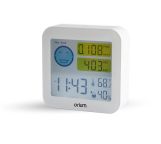
- Orium Quaelis 20 Air Quality Meter 50 °C, 95 %RH Max
- Renesas Electronics ZMOD4410AI1V Carbon Dioxide Air Quality Sensor for Monitor Home
- Schneider Electric VFXP08 Air Quality Monitor
- Schneider Electric VFXP14 Air Quality Monitor
- Phoenix Contact 1074979 Air Quality Monitor
- Schneider Electric VFXP10 Air Quality Monitor
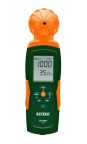
- Extech EN510 Data Logging Air Quality Monitor 1300 °C 95 %RH Max, Battery-Powered
- Testo Data Logging Air Quality Monitor 70 °C 100 %RH Max, Battery-Powered