Microscopes
Microscopes are optical and digital instruments designed to magnify small objects for detailed inspection, analysis, and documentation. Commonly used in laboratories, education, manufacturing, and quality control, microscopes allow users to observe structures and surface features that are not visible to the naked eye.
RS Philippines offers a broad selection of microscopes suited for laboratory work, inspection tasks, and digital imaging. The range supports use in both educational environments and professional applications, such as quality assurance, materials analysis, and electronics inspection.
You can find out more in our microscopes guide.
How Do Microscopes Work?
Traditional optical microscopes form an image by passing light through an objective lens, which produces a real, magnified intermediate image that is further enlarged by the eyepiece (ocular lens). The total magnification is obtained by multiplying the magnification of the objective lens by that of the eyepiece.
Different illumination methods are used depending on the sample. Transparent specimens are viewed using transmitted light from below, while opaque surfaces such as metals or circuit boards require reflected light from above.
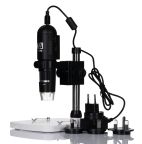
Digital and USB microscopes combine optical magnification with an electronic image sensor, allowing images to be displayed on a monitor or computer. These systems often support software-based measurement, annotation, and image capture, which is useful for documentation, training, and quality control tasks.
Key Types of Microscopes
Selecting the right microscope depends on how the instrument will be used and the type of specimen being examined.
- Biological Microscopes (Compound): Designed for viewing prepared slides and thin specimens under transmitted light; compound microscopes are widely used in laboratories, education, and research settings for biological and microbiological observation.
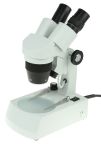
- Stereo Microscopes: Also known as dissecting microscopes, these instruments provide a three-dimensional, upright image at lower magnifications, making them ideal for dissection, assembly work, and surface inspection.
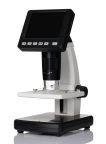
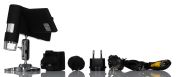
- Digital Microscope: These microscopes display images directly on a screen and often include integrated cameras and measurement software, making them useful for quality control, training, and documentation.
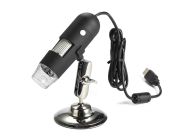
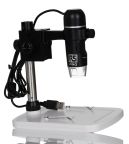
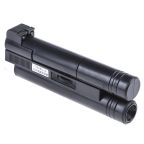
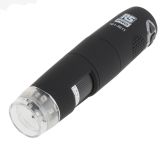
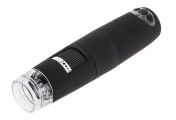
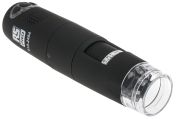
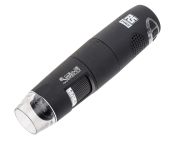
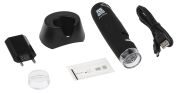
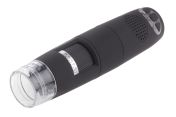
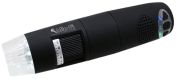
- USB Microscope: Compact and portable; USB microscopes connect directly to a computer and are suitable for basic inspection, imaging, and field use where flexibility is required.
- Metallurgical / Reflected-Light Microscopes: Designed for examining opaque samples such as metals, coatings, and PCBs, these microscopes use reflected illumination and are common in industrial and materials analysis.
Applications and Users of Microscopes
Microscopes are widely used across education, research, and industry wherever detailed visual inspection and analysis are required. From laboratory observation to quality control and documentation, they support both routine tasks and specialized workflows.
- Laboratories, Research, and Education: In laboratories and academic institutions, microscopes are used for biological observation, microbiology studies, and hands-on classroom training with prepared slides and samples.
- Geoscience and Materials Analysis: Geoscientists use microscopes to study rock formations, mineral structures, soil samples, and particulate matter, supporting geological research and environmental analysis.
- Electronics and PCB Inspection: Stereo and digital microscopes assist engineers and technicians with solder joint inspection, trace examination, and rework validation during electronics assembly and repair.
- Manufacturing and Quality Assurance: Production and QA teams use microscopes to examine surfaces, detect defects, and check materials or components for contamination and consistency.
- Forensics, Documentation, and Training: Digital microscopes enable image capture for reporting, training materials, and evidence documentation, supporting clear visual records without subjective interpretation.
- Medical and Clinical Training (Non-diagnostic): Microscopes are also used in teaching environments for laboratory skills training and general observation, without making clinical or diagnostic claims.
How to Choose the Right Microscope
Choosing the right microscope starts with matching the instrument to your application.
- Use case: Slides and transparent samples suit biological microscopes, while inspection and assembly work benefit from stereo or digital microscopes.
- Magnification and Resolution: Effective resolution is dependent on optical quality and numerical aperture, rather than magnification alone. Higher magnification without sufficient resolution does not improve image clarity.
- Working Distance: Sufficient working distance allows tools or samples to be manipulated during inspection, particularly in electronics and assembly applications.
- Illumination Type: Transmitted illumination is used for viewing slides, while reflected illumination is preferred for opaque samples and electronic components.
- Ergonomics and Viewing Comfort: Binocular or trinocular heads, adjustable viewing angles, and stable support more comfortable use during prolonged inspection or laboratory work.
- Digital Features: Key considerations for digital microscopes include camera resolution, frame rate, software compatibility, and calibration requirements for dimensional measurement or documentation.
- Budget and Availability: Compare prices to find suitable options from a reliable microscope supplier in the Philippines.
Maintenance & Care for Microscopes
Proper care helps maintain microscope performance and accuracy.
- Clean lenses using lens paper and approved optical cleaning solutions to avoid scratching coatings.
- Store microscopes covered in a dry environment to prevent dust and moisture damage.
- Handle instruments carefully using the base and arm to reduce the risk of optical misalignment.
- Calibrate digital measurement systems periodically when dimensional accuracy is required.
Why Buy Microscopes from RS Philippines?
RS Philippines is a trusted microscope supplier offering a broad selection of microscopes for laboratory, educational, and industrial use. Our range includes microscopes from brands such as RS PRO, Kern, and Bresser, supported by clear technical specifications to aid product selection.
We provide transparent microscope prices, reliable local availability, and fast nationwide delivery. Customers can also source related laboratory essentials such as microscope accessories, inspection lamps, and lab equipment in one convenient order—making RS a dependable partner for laboratory and inspection equipment. For more information, visit our delivery information page.


Popular Searches
Related links
- RS PRO USB Digital Microscopes, 20 to 200 X Magnification
- RS PRO USB Digital Microscopes, 10 to 300 X Magnification
- Bresser 58-02520 Stereo Microscope, 10x Magnification
- Conductivity Meters
- DIN Rail Transformers
- RS PRO WiFi Digital Microscopes, 10 to 230 X Magnification
- AV Adapters
- Dino-Lite AD7013MTL USB Digital Microscope 20 → 90X Magnification