Micro Switches
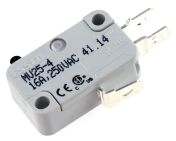
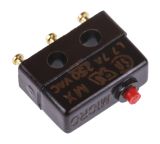
A micro switch, also known as a snap-action switch, is a highly precise and sensitive electromechanical device designed to actuate rapidly with minimal physical force. It is commonly used as a reliable detection, control, or safety component in electronics, industrial machinery, and household appliances. A micro switch typically consists of three primary components: an actuator that receives external force (common types include the plunger micro switch and roller lever micro switch); internal electrical contacts that open or close the circuit; and a protective housing that encloses the mechanism. Its role is to deliver a fast and dependable electrical response to a specific physical position or movement.
What Is a Micro Switch and Its Key Components?
A micro switch is a momentary contact switch that utilizes a "snap-action" tipping-point mechanism. This design ensures an extremely fast transfer of contacts with minimal actuator travel, which reduces electrical arcing and enhances reliability. Its core components are engineered for precision and durability.
The Actuator
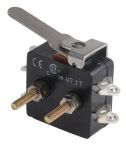
The actuator is the external part that receives physical force to trip the internal mechanism. Common actuator types include:
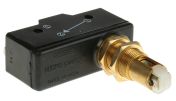
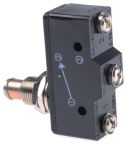
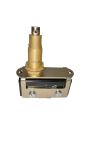
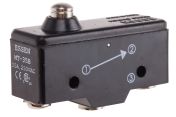
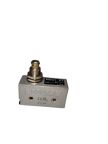
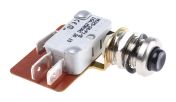
- Plunger micro switch (pin plunger): A simple button-like actuator pushed perpendicularly.
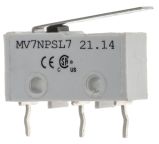
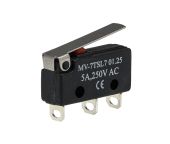
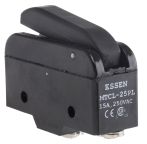
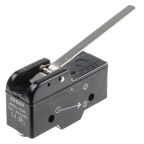
- Lever: A short arm extending from the housing.
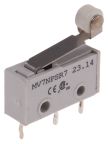
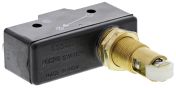
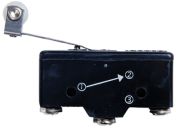
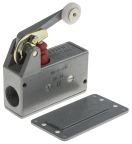
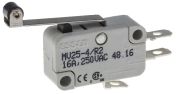
- Roller lever micro switch: A lever tipped with a small rolling wheel to reduce friction during actuation.
These variations allow the switch to interface effectively with different mechanical configurations and forces.
Electrical Contacts
The internal contacts are usually made from silver or gold alloy for excellent electrical conductivity and durability. A common configuration is the versatile SPDT micro switch (Single Pole, Double Throw) with three terminals: common (C), normally open (NO), and normally closed (NC). This versatile setup allows the switch to either open or close circuits depending on actuator position.
The Housing
A robust plastic housing encloses and insulates the internal components, protecting them from environmental contaminants like dust and moisture while providing secure mounting points. The housing also helps in meeting ingress protection standards relevant to the application environment.
How Does a Micro Switch Work?
A micro switch operates via an internal spring mechanism. A small force on the actuator pushes a spring past a tipping point, releasing stored energy. This causes the contacts to "snap" instantly from one position to another (NO to NC or vice versa). This rapid action is independent of actuator speed and minimizes electrical arcing, ensuring a clean and reliable switching action suitable for both AC and DC loads.
Uses and Benefits of Micro Switches
The precision and reliability of micro switches offer significant advantages in control systems.
- Limit Switching for Machinery: They are commonly used as limit switches to define the operational boundaries of moving parts in industrial automation, such as on a robotic arm or conveyor system.
- Precise Control of Circuits: The high repeatability of their switching action makes them ideal for precise circuit activation, such as in detector switches for electronics.
- Safety Cut-Offs: Micro switches are critical for safety interlocks, such as on machine guard doors, or in tandem with switch disconnectors to immediately cut power when a hazardous area is accessed.
- Compact and Reliable Design: Their small form factor allows any micro switch to function as a simple on-off control in tight spaces, while industrial-grade models offer millions of reliable switching cycles.
Where to Find Micro Switches in Devices and Machines
Micro switches are ubiquitous across many industries. They are found in industrial machinery for jam detection, automotive systems for door latch and seatbelt sensing, and consumer appliances like microwaves for door closure detection. They also provide tactile click in components like push button micro switches on control panels.
Types of Micro Switch Actuators
The actuator type is selected based on the specific mechanical interaction required by the application.
- Plunger / Pin Plunger: This basic pin or button actuator is designed for direct, in-line actuation where an object makes perpendicular contact.
- Roller Lever: A roller lever micro switch features a lever with a roller tip, which minimizes friction and wear when actuated by sliding or rotating cams.
- Long Lever: A long lever micro switch uses an extended arm to provide greater mechanical advantage, requiring less force for actuation in sensitive applications.
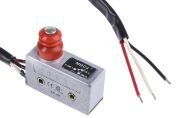
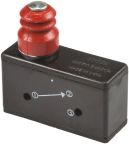
- Push Button: A push button micro switch is designed with a larger actuator for direct manual operation in control panels or human-machine interfaces.
Operating Life of Micro Switches
A micro switch's longevity is measured by its mechanical life (the number of cycles before physical failure) and its electrical life (cycles under a specified load before contact degradation). Electrical life is always lower than mechanical life and is heavily influenced by the voltage, current, and type of electrical load being switched.
Common Applications of Micro Switches
Key applications include position sensing in industrial machinery like conveyors and CNC machines; door latch and brake light activation in automotive systems; paper detection in printers and lid locks in consumer appliances; and safety interlocks in medical equipment like infusion pumps.
How to Choose the Right Micro Switch
Selecting the correct component requires careful consideration of several key parameters.
- Actuator Type: Match the plunger, lever, or roller to the actuating object.
- Operating Force (OF): Select a force rating appropriate for the application's sensitivity and vibration levels.
- Electrical Rating: Verify the switch's voltage and current ratings exceed the application's electrical load.
- Durability: Check the mechanical and electrical life cycle ratings to ensure sufficient service life.
- Environmental Protection: Choose a switch with an appropriate IP rating (e.g., IP67 for a waterproof micro switch) for dusty or wet environments.
The Leading Supplier and Distributor of Micro Switches in Philippines
RS is your trusted partner for high-performance micro switches in the Philippines. We offer a comprehensive selection from renowned manufacturers such as Honeywell, Omron, and Panasonic. Our extensive inventory includes a wide range of actuator types and electrical ratings at competitive price points, ensuring you can source the ideal micro switch for any industrial application.
We also stock other critical automation and control components, including industrial push buttons and electromechanical relays, to fully support your system requirements. Buy your plunger micro switch, roller lever micro switch, or waterproof micro switch online today. For full details on our ordering process and shipping services, please consult our delivery information page.