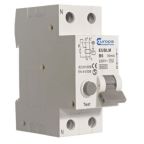
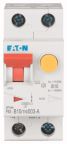
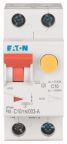
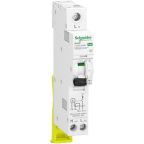
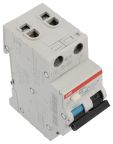
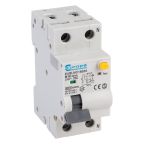
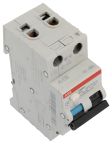
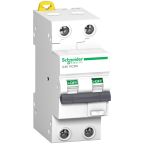
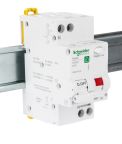
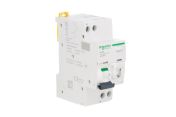
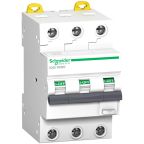
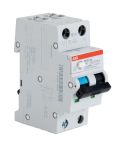
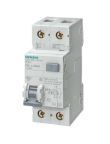
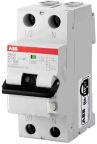
RCBOs
A Residual Current Breaker with Overcurrent Protection (RCBO) is an electrical safety device that combines the functions of a miniature circuit breaker (MCB) and a residual current device (RCD) into a single, compact unit. These devices are specifically engineered for final circuits in residential, commercial, and light-industrial distribution boards where space is at a premium, and selective protection is required. By isolating faults to individual circuits, RCBOs significantly reduce nuisance tripping across an installation, ensuring that a fault on one circuit does not disconnect power to the rest of the premises.
What Is an RCBO?
An RCBO is a dual-function protective device designed to protect both electrical circuits and people. It combines the functions of an MCB and an RCD in a single unit by:
- Detecting and interrupting overcurrents caused by overloads and short circuits
- Detecting earth leakage currents and disconnecting the supply to reduce the risk of electric shock and electrical fires
This circuit breaker is typically manufactured in a modular, DIN-rail mountable form factor, allowing them to fit seamlessly into standard consumer units and distribution boards.
Depending on the system requirements, they are available in various configurations, including 1P+N (single pole and neutral) for standard domestic use, 2P for split-phase systems, and 3P+N for three-phase industrial applications where full isolation of the neutral line is mandatory for safety.
How Does an RCBO Work?
The operation of an RCBO relies on two distinct sensing mechanisms housed within one shell. For overcurrent protection, it utilizes a thermal-magnetic trip: a bimetallic strip reacts to sustained overloads, while an electromagnetic coil triggers an instant trip during a short circuit.
Simultaneously, it monitors the balance of current between the line and neutral wires using a highly sensitive internal transformer. If a leakage occurs, meaning some current is escaping to earth through a faulty appliance or a person, the magnetic fields become unbalanced. The RCBO detects this difference (the residual current) and trips the mechanism in milliseconds, disconnecting the power before fatal injuries or electrical fires can occur.
Features and Benefits
RCBOs provide a sophisticated level of circuit management that enhances both safety and operational continuity.
- Combined Leakage and Overcurrent Protection: Provides a total safety solution in a single module, protecting against fire, equipment damage, and electric shock.
- Selective Tripping: Since each circuit has its own RCBO, a fault only disconnects the affected area, leaving the rest of the installation powered.
- Flexible Ratings: Available in a wide range of current ratings and sensitivities to suit specific appliance or machinery requirements.
- Service-Friendly Troubleshooting: Simplifies troubleshooting for electricians, as the tripped device immediately identifies exactly which circuit has the fault.
- Space-Saving Design: Combines two protection functions into one modular device, saving space in crowded distribution boards.
Types of RCBOs
Choosing the correct RCBO depends on the specific electrical load, system configuration, installation environment, and the local wiring regulations governing the installation.
By Pole Configuration
- 1P+N (Single Phase + Neutral): Commonly used in residential and light commercial installations. The live conductor is protected and switched, with a neutral connection provided for full circuit monitoring.
- 2P / 3P+N (Multi-Phase): Used in split-phase or three-phase systems. These configurations provide simultaneous disconnection of all live conductors and, where required, the neutral. Three-phase RCBOs are typically applied in industrial or specialized commercial installations and are selected based on system design and regulatory requirements.
By Residual Current Type
- Type AC: Designed for standard resistive loads where only sinusoidal AC residual currents are expected. Suitable for simple resistive loads but increasingly limited in modern installations with electronic equipment.
- Type A: Detects sinusoidal AC and pulsating DC residual currents. Commonly recommended for circuits supplying electronic devices, LED lighting, and appliances with rectifiers.
- Type B: Detects AC, pulsating DC, and smooth DC residual currents. Required for applications involving inverters, variable speed drives, PV systems, and EV charging equipment.
By Trip Curve
- B-curve: Trips at 3-5 times the rated current; used for domestic lighting and resistive loads.
- C-curve: Trips at 5-10 times the rated current; the standard for commercial use and small motors.
- D-curve: Trips at 10-20 times the rated current; used for high-inrush loads like large transformers, heavy motors, or industrial equipment.
By Residual Current Sensitivity (IΔn)
- 10/30 mA: High sensitivity units designed for life safety and protection against direct contact.
- 100/300 mA: Lower sensitivity units used for fire protection and preventing equipment damage in industrial settings.
By Breaking Capacity
- 6 kA: Standard rating for domestic installations.
- 10 kA: Required for commercial and industrial environments where higher fault currents may occur.
Applications
RCBOs are versatile safety components designed to handle the diverse electrical demands of modern infrastructure, ensuring both personnel safety and operational uptime.
- Residential Circuits: Protecting high-use areas like kitchens and bathrooms where water and electricity proximity increases shock risks.
- Commercial Fit-outs: Used in office server rooms and retail units to ensure that a single faulty computer doesn't shut down the entire floor's lighting.
- Light Industrial: Safeguarding small-scale production lines and workshops where motorized tools require specialized trip curves and reliable earth leakage protection.
RCBO vs RCD vs MCB
While RCBO may look similar to RCDs and MCBs on a DIN rail, these devices serve very different roles in an electrical system.
- RCD: Monitors only for earth leakage. It provides life safety but does not protect the circuit against overloads or short circuits.
- MCB: Protects wiring from high currents and short circuits but will not detect a low-level earth leak that could cause a fatal shock.
- RCBO: Integrates both functions, delivering comprehensive protection for final circuits.
You should opt for an RCBO when you need targeted protection that combines these features. Look for these signs that an RCBO is the right choice:
- Limited Board Space: If your distribution board is crowded, a single RCBO replaces two separate devices.
- Requirement for High Continuity: Use RCBOs when you cannot afford "nuisance tripping" to affect unaffected areas of the building.
- Modern Electronic Loads: Essential when the circuit powers sensitive electronics that require specialized Type A protection.
How to Choose the Right RCBO
Selecting the correct RCBO unit involves matching the device’s electrical characteristics to the circuit design, load, and environmental conditions.
- Circuit Rating: Select an RCBO with a rated current (e.g., 6A, 16A, 32A) that matches the maximum current the downstream cable and connected load can safely handle.
- Leakage Sensitivity: A 30 mA RCBO is the standard choice for personnel protection against electric shock. Higher ratings, such as 100 mA or 300 mA, are typically used for equipment protection or fire prevention, rather than direct personal safety.
- Trip Curve: Choose Type B RCBOs for circuits with low inrush currents, such as lighting or resistive loads, and Type C RCBOs for general-purpose applications where moderate inrush currents are expected, including small motors or power supplies.
- Residual Current Type: Type A RCBOs are recommended for modern installations, as they can detect both AC and pulsating DC leakage currents commonly generated by electronic loads, LED drivers, and switched-mode power supplies. Type B devices may be required for specialized industrial or EV-related applications.
- Poles and Voltage: Verify if your system is single-phase (230V) or three-phase (400V) to choose the correct pole configuration.
- Breaking Capacity: Check that the rated short-circuit breaking capacity (kA) is equal to or greater than the prospective fault current at the installation point.
- Mechanical Fit and Compatibility: Confirm the unit width (e.g., 1-module vs 2-module) fits your existing busbar and rail setup.
- Budget and Availability: Balance upfront costs with the long-term reliability of choosing industry-standard components.
Why Buy RCBOs from RS Philippines?
RS Philippines is a leading distributor of high-quality switchgear, providing engineers and contractors with a massive selection of circuit protection solutions. Our inventory features circuit breakers from world-renowned brands such as ABB, Siemens, and Eaton, ensuring that your installations meet the highest global safety standards for reliability and performance. We offer transparent local pricing and detailed technical data for every unit, allowing you to make informed decisions for residential or industrial projects before buying. By choosing RS, you gain access to a reliable supply chain that priorities =es authentic products and rapid fulfillment across the Philippines.
Benefit from our fast and flexible shipping across the Philippines, designed to ensure your RCBOs arrive exactly when needed. For specific details on lead times and service fees, please visit our delivery information page.