Coaxial connectors, also known as RF connectors, connect coaxial cables to electronic equipment to enable reliable transmission of radio-frequency signals, typically ranging from kilohertz (kHz) to several gigahertz (GHz). They are designed for controlled impedance systems, most commonly 50 Ω and 75 Ω, to minimize signal loss, reflections, and electromagnetic interference.
What Is a Coaxial Connector?
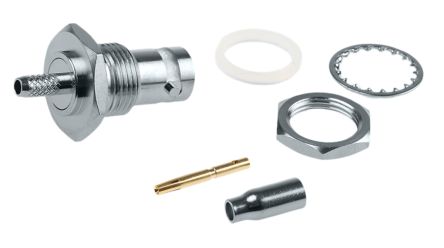
A coaxial connector is a precision-engineered interface that provides a mechanically secure and electrically matched connection between a coaxial cable and a device or another cable. These connectors consist of a center contact (signal conductor), a dielectric insulator, and an outer conductor or shield, which together maintain the characteristic impedance of the transmission line and minimize signal loss and reflection.
Different coupling mechanisms are used depending on application requirements, including bayonet (BNC), threaded (SMA, N, TNC), push-fit (MCX, MMCX), and threaded (F-type) designs. Each offers different trade-offs in connection speed, vibration resistance, and frequency performance.
What Do Coaxial Connectors Do?
Beyond physical connection, coaxial connectors function as high-performance bridges that optimize signal transmission through:
- Controlled Impedance: The connector geometry is designed to maintain the system’s characteristic impedance, helping to achieve low Voltage Standing Wave Ratio (VSWR) and minimize signal reflections and power loss.
- EMI/RFI Suppression: The coaxial structure provides continuous 360° shielding, reducing susceptibility to external electromagnetic interference and limiting signal radiation.
- Mechanical Reliability: Defined mating forces, coupling mechanisms, and torque specifications ensure consistent electrical performance across repeated mating cycles and under mechanical stress.
Types of Coaxial Connectors
There are various types of coaxial connectors available. Choosing the right connector depends on factors such as frequency range, cable impedance, power handling, and installation environment.
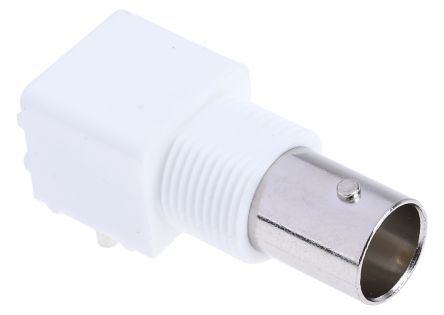
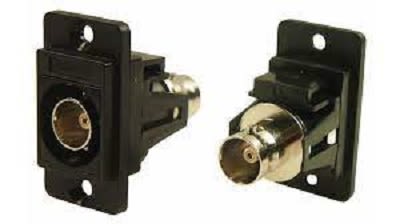
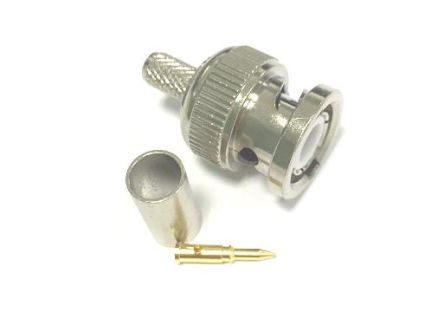
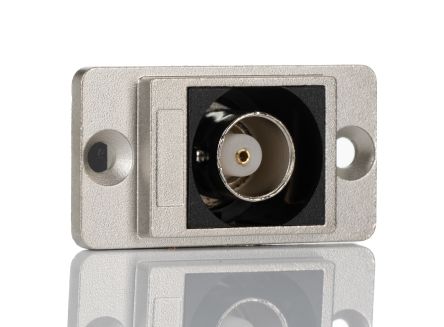
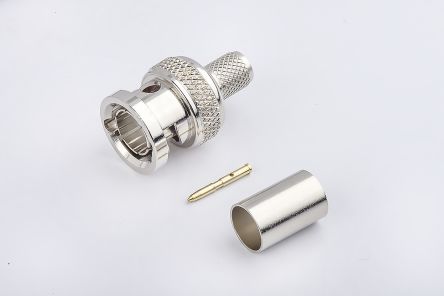
- BNC (50 Ω/75 Ω): A bayonet-style connector widely used in test and measurement equipment like oscilloscopes and signal generators. 75 Ω BNC male connectors are standard for CCTV and broadcast video systems. Typically used below 4 GHz, though some applications may operate at higher frequencies.
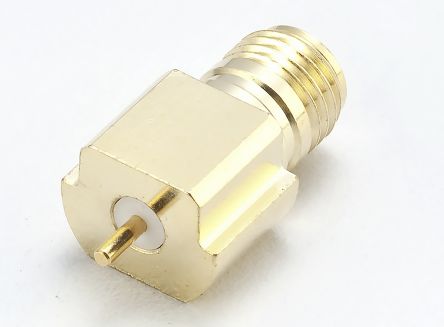
- SMA / RP-SMA (50 Ω): Threaded microwave connectors for Wi-Fi, LTE modules, GPS, and laboratory RF equipment. Reverse-polarity (RP-SMA) versions are used to meet wireless regulatory requirements by changing the center contact gender. These connectors often handle frequencies up to 18–26.5 GHz depending on the grade.
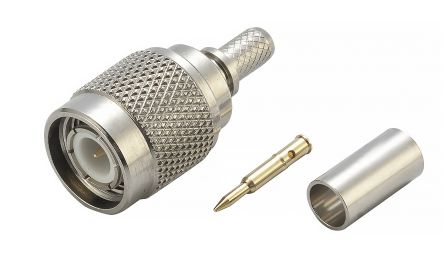
- TNC (50 Ω): A threaded version of the BNC connector offering superior performance at higher frequencies (commonly up to ~11 GHz) and better stability in high-vibration environments.
- N-Type (50 Ω/75 Ω): Rugged, outdoor-friendly connectors with high power handling, ideal for antennas and base station infrastructure. Standard versions operate up to ~11 GHz, while precision versions can support even higher frequencies.
- SMB/SMC (50 Ω): Compact connectors designed for space-constrained RF modules. SMB uses push-fit connections, while SMC is threaded. Suitable for internal connections in IoT, wireless, and lab devices.
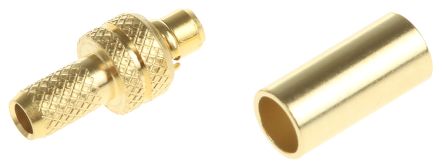
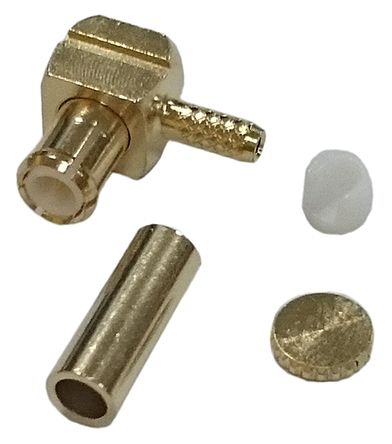
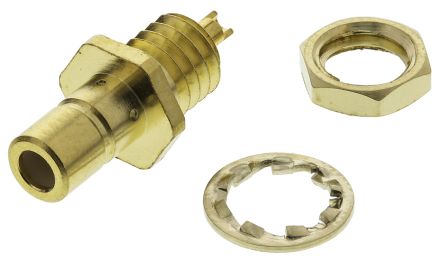
- MCX/MMCX (50 Ω): Micro push-on connectors ideal for very small devices, such as mobile modules, GNSS receivers, and IoT hardware. They allow quick connection in tight spaces.
- F-Type (75 Ω): Threaded or compression connectors used exclusively in television, satellite, and cable modem installations with RG-6 or RG-59 cables.
- UHF (PL-259/SO-239): Legacy connectors primarily used in HF/VHF amateur radio and some industrial applications. These connectors do not maintain controlled impedance and are not recommended for precision RF applications.
- Precision RF Series: Metrology-grade connectors such as 3.5 mm, 2.92 mm (“K”), and 2.4 mm, designed for high-frequency laboratory testing and calibration. Maximum operating frequencies vary by type: 3.5 mm (34 GHz), 2.92 mm (40 GHz), 2.4 mm (~50 GHz).
Applications
Coaxial connectors are used wherever maintaining signal integrity and controlled impedance is important, across industries ranging from testing to broadcast and wireless communications.
- Test & Measurement: BNC, SMA, and N-type connectors are the standard interfaces for oscilloscopes, signal generators, spectrum analyzers, and network analyzers.
- Security & Broadcast: 75 Ω BNC and F-type connectors are essential for CCTV, digital television, and satellite signal distribution.
- Wireless, IoT & Antennas: SMA, RP-SMA, and N-type connectors link radios, IoT gateways, and antennas to their respective feeders.
- Telecom & Industrial RF: TNC, N-type, and MCX/MMCX connectors are used in repeaters, base station instrumentation, and specialized radio equipment, providing reliable connections even in high-vibration or challenging environments.
How to Choose the Right Coaxial Connector
Choosing the correct coaxial connector requires matching electrical specifications with physical requirements to ensure a reliable RF link.
- Impedance Match: Align the connector impedance (50 Ω or 75 Ω) with both your equipment and cable (e.g., use 50 Ω for RG-58 and 75 Ω for RG-59 or RG-6) to avoid reflections and signal loss.
- Frequency & Power: Choose a series rated for your maximum operating frequency and power levels; always verify the VSWR and insertion loss specifications.
- Cable Compatibility: Ensure the connector is designed for your specific cable type and outer diameter so the ferrule, pin, and body fit precisely.
- Termination Method: Select from crimp, clamp, solder, or compression based on your available tooling, field service needs, and required repeatability.
- Gender & Polarity: Confirm the male/female requirements and check for reverse-polarity (RP-SMA) variants where specified.
- Environment: For outdoor or corrosive sites, prioritize specific plating (gold or nickel), weather-seals, and appropriate IP ratings.
- Budget & Availability: Check local stock and compare prices for BNC and other coaxial types to avoid long lead times.
Features & Benefits
High-quality RF connectors provide more than just a connection; they offer long-term stability for sensitive electronic systems.
- Consistent RF Performance: Precision-controlled geometry and materials help maintain characteristic impedance, low VSWR, and predictable insertion loss across the specified frequency band.
- Fast, Reliable Assembly: Modern crimp and compression systems reduce installation time while enabling consistent terminations when the correct tooling and strip dimensions are followed.
- Mechanical Durability: Robust bodies, defined coupling mechanisms, and rated mating cycles contribute to reliable operation in lab, telecom, and field installations.
- Broad Ecosystem: A wide range of compatible coaxial cable connectors, adapters, and terminators allow for complete RF chain customization.
Installation & Assembly Tips
Proper assembly of an RF cable connector is as important as the quality of the component itself.
- Precise Preparation: Always use the manufacturer-specified strip dimensions and the correct crimp die size for your specific cable series.
- Shield Integrity: Avoid nicking the braid or center conductor during stripping; ensure a full 360° braid capture under the ferrule for maximum shielding.
- Soldering Best Practices: Apply heat quickly with the proper flux to prevent solder "wicking," which can stiffen the cable and cause premature failure.
- Torque Specifications: Use a torque wrench for SMA and N-type connectors to meet specs; avoid over-tightening bayonet-style BNC connectors.
- Testing: Perform continuity and return-loss checks post-installation, and always weatherproof outdoor connections with boots or specialized tape.
Why Buy Coaxial Connectors from RS Philippines?
RS Philippines offers a premium selection of coaxial connectors from leading brands like Telegartner, TE Connectivity, and Radiall. We provide transparent prices and real-time stock availability across our entire inventory. Whether you need to buy BNC male, SMA, N-type, or TNC components, our range covers all 50 Ω and 75 Ω requirements.
Explore our collection online to access technical datasheets and find the right RF connector or complementary accessories, such as oscilloscope probes, for your equipment. Benefit from a one-stop-shop experience with fast, flexible shipping across the Philippines. For details on lead times and fees, please visit our Delivery page.