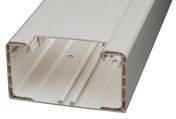
Cable Trunking
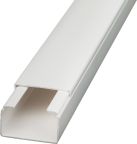
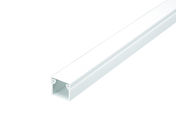
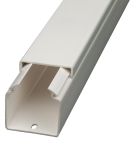
Cable trunking is a system used to organize and protect electrical cables or wires in buildings or industrial settings. It provides a safe and tidy way to route and conceal cables, improving the overall appearance and safety of the installation. Cable trunking typically consists of a rectangular or square-shaped enclosure made of plastic, metal, or sometimes rubber. The enclosure has a removable or hinged cover, allowing easy access to the cables when necessary. The trunking is designed with various compartments or channels to accommodate multiple cables of different types and sizes.
What Is Cable Trunking?
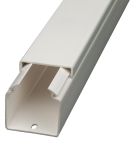
Cable trunking consists of enclosed channels, often rectangular in cross-section, equipped with a removable lid to route and protect multiple cables together. It is sometimes referred to as cable duct, cable channel, wire trunking, or wire duct, especially when used inside control panels. These systems are manufactured from various materials to suit different environments, including PVC, metal (typically steel or aluminum), and other specialized plastic variants.
Why Use Cable Trunking?
There are many reasons why electrical trunking is a staple in professional installations:
- Cable Protection: Trunking shields cables from physical damage, such as dust, impact, crushing, or accidental contact with sharp objects, which could potentially cause short circuits, electric shocks, or fires.
- Cable Organization & Expansion: Trunking helps to keep cables organized and prevents them from becoming tangled or snarled, making it easier to identify and manage individual cables during installation, maintenance, or repairs. It also facilitates simple system expansion, as new cables can be added to existing runs without the need for extensive structural changes.
- Safety & Compliance: Cable trunking helps maintain vital segregation between power, control, and data circuits to support strict electrical standards and ensure safe, interference-free installations.
- Aesthetics: It effectively conceals unsightly cables for a cleaner, professional appearance in offices, retail spaces, and residential areas.
- Flexible Routing: By using modular components like bends, tees, reducers, and flexible cable trunking, installers can route around obstacles without the need for excessive joints or complex modifications.
- Electromagnetic Interference (EMI) Protection: Some types of trunking are designed with features like metal shielding or grounding capabilities, which help to reduce electromagnetic interference or electromagnetic radiation emitted by the cables.
Types of Cable Trunking
There are different types of electrical trunking suited for different applications; some of the most common are:
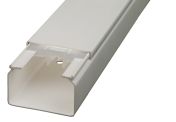
- PVC Trunking / PVC Cable Trunking: PVC (Polyvinyl Chloride) trunking is the most common type and is widely used in various applications. It is affordable, lightweight, and easy to install. PVC trunking is available in different sizes, shapes, and colors, allowing for flexibility in cable management.
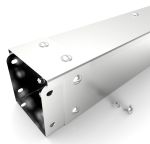
- Metal Cable Trunking (Steel): Metal trunking, usually made of steel or aluminum, offers robustness and durability. It provides excellent protection against physical damage, such as impact or crushing. Metal trunking is often used in industrial environments or areas where there may be a higher risk of mechanical stress or where fire resistance is required.
- Aluminum Cable Trunking: This type is lighter than steel while remaining highly durable. Aluminum cable trunking is corrosion-resistant and visually appealing, making it suitable for commercial buildings and exposed runs where both weight and appearance matter.
- Plastic Trunking (Non-PVC Variants): These include other plastic trunking materials, such as halogen-free or low-smoke variants. They are designed for specific environments requiring enhanced fire safety, chemical resistance, or reduced toxic fume emission during a fire.
- Adhesive Cable Trunking: Adhesive trunking, also known as self-adhesive trunking, comes with a pre-applied adhesive strip on the back. It simplifies installation by allowing the trunking to be directly stuck to walls, ceilings, or other surfaces without the need for additional fixings. Adhesive trunking is commonly used in situations where drilling holes for mounting is not desirable.
- Flexible Cable Trunking: Flexible trunking, typically made of plastic or rubber, is designed to accommodate cables that require bending or routing around corners. It is especially useful when dealing with cables in confined or complex spaces. Flexible trunking often comes in the form of coiled or spiral wraps that can expand and contract as needed.
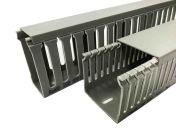
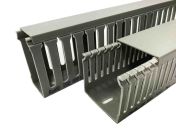
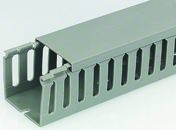
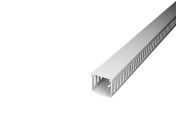
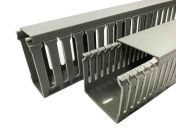
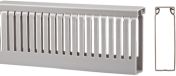
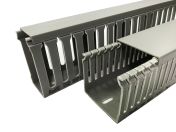
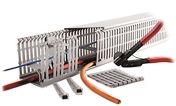
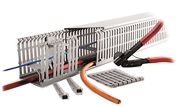
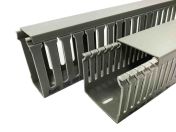
- Slotted Cable Trunking / SlottedWire Trunking: Often called “finger” trunking, slotted cable trunking is used mainly in control panels and cabinets. The side slots allow for easy exit and rerouting of individual wires at any point while keeping the main ducts neat and organized.
Applications of Cable Trunking
Electrical trunking is a versatile solution found in almost every modern built environment:
- Commercial & Office Buildings: Cable trunking is commonly used to route power and data cables along walls, ceilings, and under counters for desks, meeting rooms, and workstations to maintain a clutter-free environment.
- Industrial & Manufacturing Sites: Installers often use metal cable trunking to protect wiring in workshops and production lines. This ensures workplace safety by shielding cables from heavy impacts and accumulated dust.
- Control Panels & Switchboards: Slotted cable trunking or wire trunking keeps panel wiring organized and accessible. When paired with heat shrink tubing for wire identification, it ensures maintenance is fast and efficient.
- Data & Telecom: Electrical trunking is commonly used to manage high-density structured cabling and low-voltage wiring in equipment rooms, server racks, and dedicated IT spaces.
- Residential & Light Commercial: Cable trunking is ideal for concealing surface-mounted wiring in renovations where chasing into solid walls is not practical or cost-effective.
How to Choose the Right Cable Trunking
Choosing the correct system is important for both safety and future-proofing. When buying electrical trunking, here are the key factors to consider:
- Cable Capacity & Size: Calculate the total cable cross-section and choose trunking that allows spare fill, typically 20–40% extra for future circuits and heat dissipation.
- Material Selection: Use PVC cable trunking or plastic trunking for standard indoor use; choose cable trunking metal for industrial or fire-critical environments.
- Environment & Compliance: Consider whether the installation is indoor or outdoor, humidity levels, chemical exposure, and local electrical regulations.
- Routing & Flexibility: Decide if you need rigid straight runs with standard fittings or flexible cable trunking for curved and complex routes.
- Aesthetic & Access Needs: For visible areas, pick colors that blend with interiors; for panels, slotted cable trunking or wire trunking is preferred for frequent wiring changes.
- Budget & Availability: Consider performance and price, and take into account long-term maintenance and the ease of future expansion.
Why Buy Cable Trunking from RS Philippines?
As a trusted supplier and distributor of cable trunking, RS Philippines provides a comprehensive selection of cable trunking at competitive prices. Our products are sourced from reputable brands like Igus, HellermannTyton, and Betaduct, ensuring reliable and high-quality options for every application. Beyond cable trunking, we also offer a range of cable management components, such as cable covers and cable wraps, to ensure your entire wiring infrastructure is secure and professional.
Browse our user-friendly online site to explore the full range and have your items conveniently shipped to your door. With our swift and flexible delivery options in the Philippines, we ensure the timely arrival of your products. Visit ourdelivery information page for more details on delivery times and fees.