Fibre Optic Cable
A fiber optic cable is an advanced networking solution that transmits data over long distances at very high speeds using pulses of light. This technology consists of incredibly thin strands of glass or plastic, with each fiber optic wire capable of carrying vast amounts of information simultaneously.
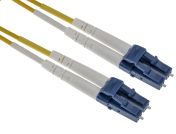
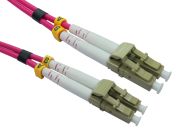
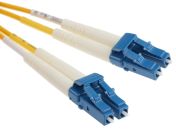
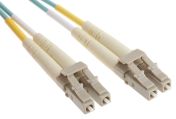
Every cable requires specialized connectors to terminate the ends and ensure a clean transmission of light signals. This technology is the backbone of modern high-speed infrastructure, essential for applications in telecommunications, data centers, and large-scale enterprise networking.
What Is a Fiber Optic Cable?
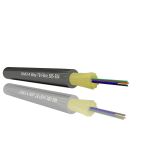
Structurally, a fiber optic cable is a composite cable built around a central core made of ultra-thin glass or plastic strands called optical fibers. Unlike traditional copper cables that transmit electrical signals, fiber optic cables carry information encoded as pulses of light, which allows for data transmission at incredible speeds over vast distances.
Each individual fiber optic wire consists of two main parts: the core, which is the central part that carries the light signal, and the cladding, a surrounding layer that reflects the light back into the core to prevent signal loss and maintain signal strength.
Compared to traditional copper cables, fiber optics provide significantly greater bandwidth, much lower signal attenuation over long distances, and complete immunity to electromagnetic interference (EMI). To be used in a network, each cable must be terminated with specialized connectors designed for optimal light transmission.
These benefits make fiber optic cable the preferred choice for modern high-speed communication systems, including telecommunications, internet backbones, and data transmission networks.
Benefits of Fiber Optic Cables
A fiber optic cable offers significant technical advantages over traditional cabling. While the initial high price per meter of fiber optic cables may be a consideration, the long-term benefits in performance and reliability are unmatched, especially for critical infrastructure in places like the Philippines.
- Exceptional Speed and Bandwidth: Fiber can transmit vast amounts of data at high speeds, making it the ideal for high-bandwidth applications like HD video streaming, cloud computing, and large-scale data transfers.
- Extremely Low Latency: The technology provides very low latency, meaning data travels with minimal delay. This is crucial for real-time applications where responsiveness is key, such as online gaming, video conferencing, and financial trading.
- Immunity to Interference: A fiber optic cable's immunity to electromagnetic interference (EMI) makes it the ideal choice for providing reliable network connections to industrial computers and control systems in noisy factory environments.
- Enhanced Security: The light-based signal is contained entirely within the core, making it extremely difficult to tap into without being detected. This inherent security makes fiber an excellent choice for transmitting sensitive or confidential data.
- Long-Distance Transmission: Fiber can carry signals over many kilometers with minimal signal degradation. This reduces the need for signal boosters or repeaters, impacting the overall cost and complexity of a network.
- Lightweight and Space-Efficient: Fiber optic cables are significantly thinner and lighter than copper cables. This makes them easier to install, especially in crowded conduits or tight spaces.
- Superior Durability: Composed of glass or plastic, fiber is resistant to corrosion and harsh environmental conditions, giving it a longer lifespan and making it more reliable.
- Versatile Applications: This technology is the backbone of many modern systems, including internet networks, telecommunications, cable television, data centers, and military communications.
Types of Fiber Optic Cables
When selecting a fiber optic cable from a supplier in the Philippines, it's crucial to understand the two main categories: single-mode and multi-mode.
Each is constructed differently to transmit light in a specific way, making them suitable for different applications.
Single-Mode Fiber (SMF)
Single-mode fiber features a very narrow core that allows only a single path, or mode, of light to travel through it. This focused transmission results in very little signal dispersion, allowing the data to travel over extremely long distances without significant loss.
SMF is the standard choice for long-haul telecommunications, metro networks, and undersea cables, supporting high-bandwidth applications at wavelengths typically of 1310 nm or 1550 nm.
Multi-Mode Fiber (MMF)
Multi-mode fiber has a much larger core, which allows multiple modes of light to travel through the cable simultaneously. While this makes the technology less expensive and easier to work with, it also causes more signal dispersion, limiting its effective distance.
MMF is ideal for shorter-distance applications, such as within a building or across a campus for local area networks (LANs) and data center connections. MMF commonly uses wavelengths around 850 nm. Variants include OM1 through OM5, with OM3 and above optimized for higher-speed networks.
Both cable types require specific fiber optic cable connectors and network equipment suitable for their core and transmission characteristics.
How to Choose the Right Fiber Optic Cable
Selecting the right fiber optic cable to buy is a critical decision that impacts your network's speed, reliability, and future scalability.
To ensure you make the best choice, consider the following key factors.
- Distance and Bandwidth Requirements: For short runs within a building or data center, multi-mode fiber (MMF) is a cost-effective choice. For long-distance, high-bandwidth applications, single-mode fiber (SMF) is essential as it supports higher data speeds with less signal degradation.
- Environmental Protection: Consider the installation environment. For outdoor or direct-burial applications, choose a cable with a rugged, waterproof outer jacket. While fiber is immune to EMI, armored cables can provide extra physical protection in harsh industrial settings.
- Cost Considerations: When comparing fiber optic cable price points, multi-mode fiber and its associated transceivers are generally more affordable per meter of cable, making it ideal for budget-conscious, short-distance projects in the Philippines. Single-mode fiber has a higher initial cost but is necessary for long-haul performance.
- Equipment and Connector Compatibility: Ensure the fiber optic cable you choose is compatible with your network equipment. Crucially, you must use the correct type of fiber optic cable connectors designed for your specific cable and hardware ports.
Applications of Fiber Optic Cables
The unique advantages of a fiber optic cable have made it an indispensable technology across many critical industries:
- Telecommunications: Serving as the backbone of global communication, fiber optics are used for high-speed internet, long-distance telephone networks, and submarine cables that connect continents.
- Data Centers: A fiber optic network cable is essential for high-speed data transfer within data centers, providing the backbone for connecting servers, storage area networks (SANs), and networking equipment.
- Medical and Healthcare: Used in a range of medical devices, including endoscopes for non-invasive surgery and in advanced medical imaging equipment, where their non-conductive nature is a key safety feature.
- Military and Aerospace: Valued for their security and light weight, fiber optics are used for secure data transmission in aircraft, naval vessels, and for long-distance communication in sensitive and tactical environments.
- Broadcasting and Cable Television: The high bandwidth of fiber is ideal for transmitting high-definition (HD) and ultra-high-definition (4K/8K) video and audio signals for broadcasting, CATV, and video-on-demand services.
- Industrial Automation: In automated factories, fiber optic cables provide a reliable and noise-immune network for connecting control systems, robotics, and sensors on the factory floor.
Why Buy Fiber Optic Cables from RS Philippines
Build your high-speed network with the right fiber optic cables from RS Philippines. As a leading supplier of networking infrastructure, we stock a comprehensive range of fiber optic cables for sale from manufacturers like Siemens, StarTech.com, Phoenix Contact, and our own RS PRO. Explore our full online catalog to find the perfect fiber optic cables, Ethernet couplers, and network testing tools to build and verify your high-performance network.
Sourcing your networking components through RS is a simple and efficient process. Just select the products you need for your project, add them to your basket, and finalize your order through our secure online checkout. We provide a range of payment methods to suit your business requirements. For all information regarding shipping, delivery options, and our service coverage throughout the Philippines, please refer to our dedicated Delivery Information page.
Popular Searches
Related links
- RS PRO OS1 Single Mode Fibre Optic Cable Yellow, 1 m
- RS PRO OM3 OM3 Multimode Fibre Optic Cable Black, 100 m
- RS PRO OM4 OM4 Multimode Fibre Optic Cable Low Smoke Zero Halogen 100 m
- RS PRO Fibre Optic Cable Low Smoke Zero Halogen 250 m
- StarTech.com OM2 Fibre Optic Cable Orange, 15 m
- Fibre Testers
- RS PRO OM3 Multimode Fibre Optic Cable Purple 3 m
- RS PRO Multimode Fibre Optic Cable Black, 500 m