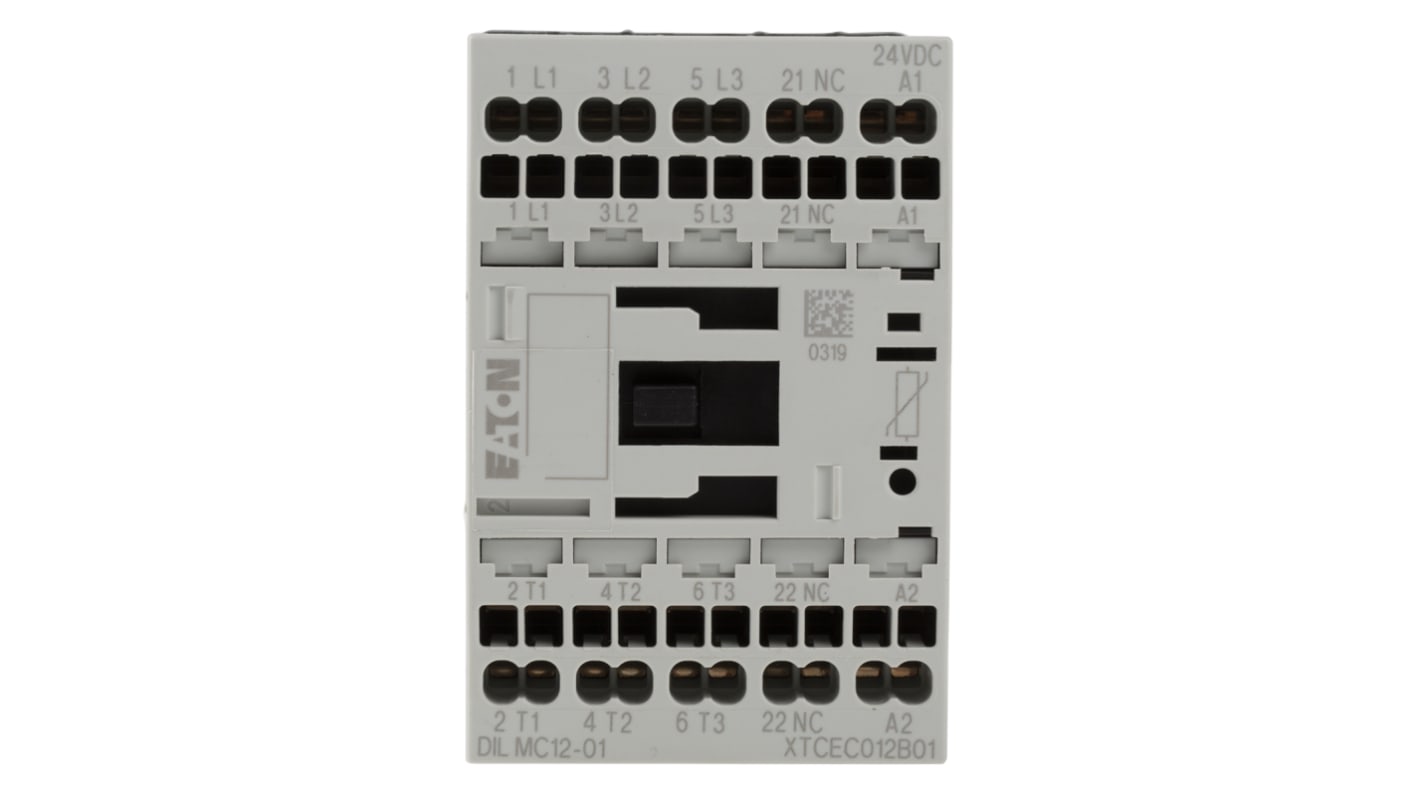
Eaton DILMC Contactor, 24 V dc Coil, 3-Pole, 12 A, 5.5 kW 24 V dc, 3 NO, 400V ac
- RS Stock No.:
- 178-8033
- Distrelec Article No.:
- 301-29-548
- Mfr. Part No.:
- 277564 DILMC12-01(24VDC)
- Manufacturer:
- Eaton

Subtotal (1 unit)*
PHP5,751.03
(exc. VAT)
PHP6,441.15
(inc. VAT)
Stock information currently inaccessible - Please check back later
Units | Per Unit |
|---|---|
| 1 + | PHP5,751.03 |
*price indicative

- RS Stock No.:
- 178-8033
- Distrelec Article No.:
- 301-29-548
- Mfr. Part No.:
- 277564 DILMC12-01(24VDC)
- Manufacturer:
- Eaton
Specifications
Technical data sheets
Legislation and Compliance
Product Details
Find similar products by selecting one or more attributes.
Select all | Attribute | Value |
|---|---|---|
| Brand | Eaton | |
| Coil Voltage | 24 V dc | |
| Product Type | Contactor | |
| Number of Poles | 3 | |
| Contact Voltage | 400V ac | |
| Contact Current | 12A | |
| Power Rating | 5.5kW | |
| Series | DILMC | |
| Function | Motor Control, Resistive Load | |
| Mount Type | DIN Rail | |
| Normal State Configuration | 3 NO | |
| Auxiliary Contact Configuration | 1 NC | |
| Number of Auxiliary Contacts | 1 | |
| Terminal Type | Spring Loaded | |
| Minimum Operating Temperature | -25°C | |
| Control Circuit Voltage Uc | 24 V dc | |
| Operational Current Ie | 12A | |
| Contactor Application | Motor Control | |
| Maximum Operating Temperature | 60°C | |
| Width | 68 mm | |
| Length | 58mm | |
| Depth | 125mm | |
| Standards/Approvals | CSA, IEC, UL | |
| Pole and Throw Configuration | 3 | |
| Select all | ||
|---|---|---|
Brand Eaton | ||
Coil Voltage 24 V dc | ||
Product Type Contactor | ||
Number of Poles 3 | ||
Contact Voltage 400V ac | ||
Contact Current 12A | ||
Power Rating 5.5kW | ||
Series DILMC | ||
Function Motor Control, Resistive Load | ||
Mount Type DIN Rail | ||
Normal State Configuration 3 NO | ||
Auxiliary Contact Configuration 1 NC | ||
Number of Auxiliary Contacts 1 | ||
Terminal Type Spring Loaded | ||
Minimum Operating Temperature -25°C | ||
Control Circuit Voltage Uc 24 V dc | ||
Operational Current Ie 12A | ||
Contactor Application Motor Control | ||
Maximum Operating Temperature 60°C | ||
Width 68 mm | ||
Length 58mm | ||
Depth 125mm | ||
Standards/Approvals CSA, IEC, UL | ||
Pole and Throw Configuration 3 | ||
RoHS Status: Exempt
Eaton 3 Pole Contactor, 12A Contact Current Rating, 24V DC Coil Voltage - DILMC Series - 277564 DILMC12-01(24VDC)
Use this 3-pole contactor from Eaton to switch high-current electrical circuits on or off. The device is climate-proofed and resistant to both corrosion and UV radiation. This, along with an operating temperature range of -25°C to +60°C, makes it suitable for use in demanding industrial environments. As an auxiliary contactor, this device can be used to control another, usually larger, switch. The normally open (NO) contacts mean power to the load is shut off when the coil is de-energised.
Features & Benefits
• Cage clamp terminals help you quickly and easily make secure connections
• Rail mounting style allows you to build neat and compact installations
What's the difference between a contactor and a relay?
Both contactors and relays are used for switching devices on and off. The main difference is that contactors are used to switch loads with a higher current. If a device can switch more than 10A, it's known as a contactor rather than a relay. Contactors are typically used to switch loads such as heating and lighting circuits, as well as motors.
Note
Replacement part code: DILM12-01(24VDC)-PI / Eaton formerly known as Moeller