Renesas Electronics 8T49N242-999NLGI Clock Buffer 40-Pin VFQFN
- RS Stock No.:
- 250-3483
- Mfr. Part No.:
- 8T49N242-999NLGI
- Manufacturer:
- Renesas Electronics

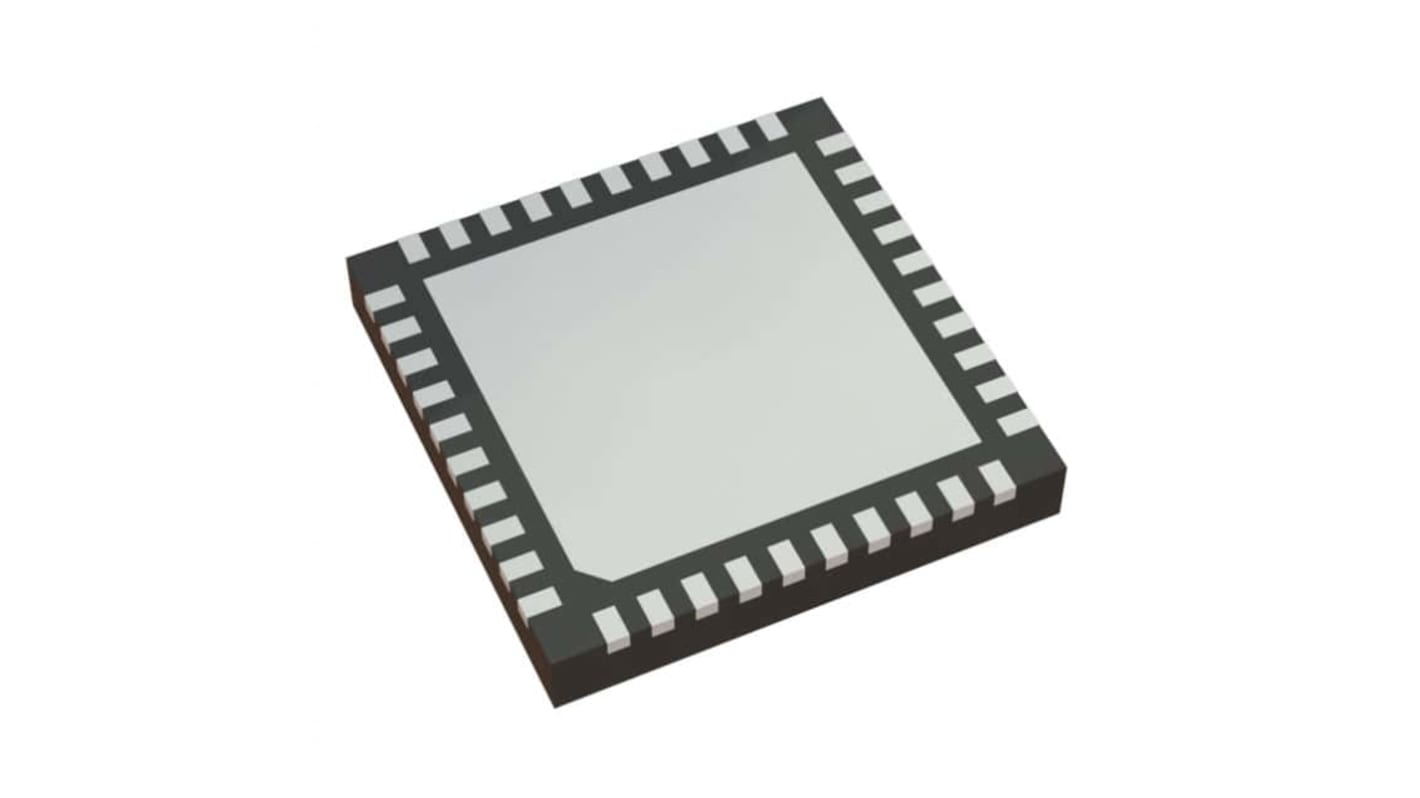
This image is representative of the product range
Currently unavailable
We don't know if this item will be back in stock, RS intend to remove it from our range soon.
- RS Stock No.:
- 250-3483
- Mfr. Part No.:
- 8T49N242-999NLGI
- Manufacturer:
- Renesas Electronics
Specifications
Technical data sheets
Legislation and Compliance
Product Details
Find similar products by selecting one or more attributes.
Select all | Attribute | Value |
|---|---|---|
| Brand | Renesas Electronics | |
| Product Type | Clock Buffer | |
| Maximum Input Frequency | 875MHz | |
| Mount Type | Surface | |
| Package Type | VFQFN | |
| Pin Count | 40 | |
| Minimum Supply Voltage | 3.14V | |
| Maximum Supply Voltage | 3.47V | |
| Minimum Operating Temperature | -40°C | |
| Maximum Operating Temperature | 85°C | |
| Length | 6mm | |
| Height | 1mm | |
| Series | 8T49N242 | |
| Standards/Approvals | RoHS | |
| Automotive Standard | No | |
| Select all | ||
|---|---|---|
Brand Renesas Electronics | ||
Product Type Clock Buffer | ||
Maximum Input Frequency 875MHz | ||
Mount Type Surface | ||
Package Type VFQFN | ||
Pin Count 40 | ||
Minimum Supply Voltage 3.14V | ||
Maximum Supply Voltage 3.47V | ||
Minimum Operating Temperature -40°C | ||
Maximum Operating Temperature 85°C | ||
Length 6mm | ||
Height 1mm | ||
Series 8T49N242 | ||
Standards/Approvals RoHS | ||
Automotive Standard No | ||
The Renesas Electronics frequency translator has one fractional-feedback PLL that can be used as a jitter attenuator and frequency translator. It is equipped with four integer output dividers, allowing the generation of up to four different output frequencies, ranging from 8kHz to 1GHz. These frequencies are completely independent of the input reference frequencies, and the crystal reference frequency. The outputs may select among LVPECL, LVDS, HCSL or LVCMOS output levels.
It accepts up to two differential or single-ended input clocks and a fundamental-mode crystal input
The internal PLL can lock to either of the input reference clocks or just to the crystal to behave as a frequency synthesizer
The device supports hitless reference switching between input clocks
The device monitors both input clocks for Loss of Signal and generates an alarm when an input clock failure is detected
The PLL has a register-selectable loop bandwidth from 0.2Hz to 6.4kHz
The device is programmable through an I2C interface
It also supports I2C master capability to allow the register configuration to be read from an external EEPROM
Related links
- Renesas Electronics 8T49N242-999NLGI Clock Buffer 40-Pin VFQFN
- Renesas Electronics 9FGV0641AKILF Clock Buffer 40-Pin VFQFPN
- Renesas Electronics 9ZXL0651EKILF Clock Buffer 40-Pin VFQFPN
- Renesas Electronics 9ZXL0652EKILF Clock Buffer 40-Pin VFQFPN
- Renesas Electronics 9ZXL0631EKILF Clock Buffer 40-Pin VFQFPN
- Renesas Electronics 9ZXL0632EKILF Clock Buffer 40-Pin VFQFPN
- Renesas Electronics 8T49N241-999NLGI Clock Generator, 40-Pin 4 VFQFN
- Renesas Electronics 9FGV0231AKLF Clock Buffer 24-Pin VFQFN