- Published Aug 13, 2025
- Last Modified Aug 13, 2025
- 9 min
The Complete Guide to Digital Thermometers
Learn how digital thermometers work and find out which type suits your needs, whether for medical, scientific, or industrial temperature measurement.

What Is a Digital Thermometer?

Digital thermometers have revolutionized temperature measurement, replacing older liquid-in-glass models with faster, more accurate, and versatile electronic devices. Unlike mercury thermometers, digital models utilize electronic sensors to provide immediate temperature readings displayed on digital screens, making them ideal across home, medical, industrial, and scientific applications.
The evolution began in the 1930s with thermistors and resistance temperature detectors (RTDs), which are the backbone of modern digital thermometers. These instruments measure temperature through changes in electrical resistance or voltage caused by heat, offering reliability and precision impossible with traditional liquid thermometers.
How Does a Digital Thermometer Work?

Digital thermometers work by converting temperature changes into electrical signals. The most common sensors include:
- Resistance Temperature Detectors (RTDs): Measure temperature by detecting electrical resistance changes in metals like platinum.
- Thermistors: Semiconductor devices whose resistance varies with temperature.
- Thermocouples: Generate a voltage in response to temperature differences between two metals.
When the sensor is exposed to temperature changes, it alters electrical resistance or voltage, which a microcontroller interprets and displays as a precise digital value. Most digital thermometers use onboard LCD or LED displays to show results instantly, which is particularly useful for real-time monitoring.
What Are Digital Thermometers Used For?
Digital thermometers are incredibly versatile instruments that find application across a broad spectrum of fields, owing to their accuracy, speed, and adaptability compared to traditional mercury or liquid-based thermometers. Their ability to provide quick, precise temperature readings makes them indispensable in both everyday and specialized settings.

Medical Applications
In healthcare, digital thermometers are widely used to measure human body temperature due to their speed, hygiene, and ease of use. They are available in various forms for oral, rectal, ear (tympanic), forehead (temporal artery), and non-contact infrared measurements, providing healthcare professionals and consumers with rapid and reliable readings. This quick data collection is essential in clinical settings for diagnosing fevers or monitoring patient health, especially in times of communicable disease outbreaks.

Food Production and Preparation
In the food industry, ensuring food safety is paramount, and digital thermometers are essential tools for monitoring temperatures during cooking, storage, and transport. Food probe thermometers, designed for insertion into meats, liquids, or other food products, help achieve safe internal cooking temperatures to prevent foodborne illnesses. Specialized “between pack” probes are used in warehouses or storage facilities to measure ambient temperatures between stacked food crates, ensuring consistent cold chain management. Hygiene considerations, such as easily sanitized probes, are critical in this sector to prevent cross-contamination.

Home Use
In everyday households, digital thermometers are widely used for cooking, climate monitoring, and childcare. From checking the temperature of oven contents to monitoring room temperature for infant care, consumers benefit from their ease of use and quick readings. Compact, portable, and affordable models make digital thermometers accessible for routine home applications.

HVAC and Central Heating
Heating, ventilation, and air conditioning (HVAC) systems depend heavily on accurate temperature measurements for efficient operation and regulatory compliance. Digital thermometers in this field measure air temperature, refrigerant line temperatures, water temperatures, and more. These thermometers often come with features tailored for HVAC professionals such as remote probes, magnetic attachments, backlit displays, and integration with other diagnostic tools. Maintaining the correct temperatures helps optimize energy efficiency and extends equipment lifespan.

Laboratory and Industrial Environments
In laboratories and industrial settings, where precision is often critical, digital thermometers provide dependable temperature data for experimentation, quality control, and manufacturing processes. These devices may feature specialized sensors suited to different temperature ranges and environments, including water baths, chemical exposures, or extreme heat. Their robust and sometimes explosion-proof designs allow safe use in hazardous locations like chemical plants. Data logging, alarm functions, and the ability to integrate with larger monitoring systems are additional features valuable in these contexts.

Meteorological Instruments
Digital thermometers are commonly used in weather stations and meteorological research to provide accurate ambient air temperature readings. Their rapid response times and digital displays facilitate easy data collection, monitoring, and reporting. Some models are designed to be highly weather-resistant to withstand outdoor conditions.
When May a Digital Thermometer Be Used?
In determining the correct environments and applications for use of specific types of digital thermometer, the following sorts of considerations should be taken into account:

Operating range
This is the range of temperatures that a given thermometer will be constructed and calibrated to work properly within, and is among the most important factors in selecting a product of this type with an intended use in mind.

Hygiene and sanitation
Products intended for use in food production and preparation, medical or laboratory settings may need to be manufactured to provide easy sanitization options, which not all models are explicitly designed for.

Waterproofing and dustproofing
Various models and brands of digital thermometers may come with different IP ratings for protection against ingress from moisture, solid particulates, inclement weather, or other potential hazards to sensitive electronic equipment.

Rigidity, shatter-resistance and explosion-proofing
Some industrial types of thermometer are more ruggedly constructed than others; many are designed to be non-sparking in the event of electrical or gas combustion within or near the device, to reduce risk of a chain reaction in the surrounding environment.

Size, weight, and portability
This also a valuable consideration if the device needs to be carried around between work sites regularly, and available for use at short notice; many digital thermometers are extremely portable, but some of the more robust and engineered varieties are less convenient for all-day carrying than the common pocket digital thermometers.

Food probe digital thermometers
To ensure thorough and even cooking, food probe thermometers need to be accurate, and to offer quickly repeatable temperature readings in multiple different areas of food undergoing production or preparation. They must be hygienic and easily sanitized between uses to prevent bacteria build-up or transfer, and often include color-coding options to help with this.
Most food probe digital thermometers will be designed to be inserted directly into the food item in question, although unlike many analogue thermometers, they’re very seldom designed to be left in food during cooking. Different types of thermometer may be better suited to solid, liquid or frozen foods.
Other types of food probe thermometers include ‘between pack’ probes, engineered to slip between stacked crates or boxes of food items in storage, and air probes intended for taking ambient temperature readings in cold storage areas.

Industrial digital thermometers
Products intended for industrial use tend to be more ruggedly constructed and suitable for use in a range of potentially challenging or hazardous environments. They may be designed to fit with multiple different probe types, including thermistors and thermocouples, and will often include additional features such as countdown timers, rubberized IP-rated housings, backlit displays and non-sparking material constructions.
Common applications for industrial digital thermometers include HACCP environments, heat and hot water system testing, air conditioning and ventilation, refrigeration, manufacturing, and measurement of organic or oxidizing surfaces.

Central heating and HVAC digital thermometers
HVAC and central heating applications are one of the most common industrial and engineering environments in which digital thermometers are routinely used. HVAC digital thermometers are most commonly used to measure air, water, copper line, and refrigerant temperatures, and must be extremely accurate as a single degree change can lead to compliance failures or equipment damage.
Common applications for industrial digital thermometers include HACCP environments, heat and hot water system testing, air conditioning and ventilation, refrigeration, manufacturing, and measurement of organic or oxidizing surfaces.
Ideal choices for HVAC applications may include additional features such as attachment magnets, extended or remote sensor probes, and even infrared sensors for use in areas that are otherwise out of easy reach.

Scientific digital thermometers
A scientific digital thermometer can play an extremely important role in all kinds of laboratory-based testing, experimentation, or product research and development.
They may form a crucial part of an incubator setup, for example, or be critical for fast and ultra-accurate readings across a very wide range of temperatures during product safety testing. In clinical trials, they might often need to be fully IP-rated for use in water baths, heating blocks and incubators, or able to run unattended for extended periods while logging or recording data.
Various sorts of scientific digital thermometers will include special features such as maximum and minimum temperature logging, on-board alarm systems, multiple readout displays or especially robust chemical and acid resistance.
Medical digital thermometers
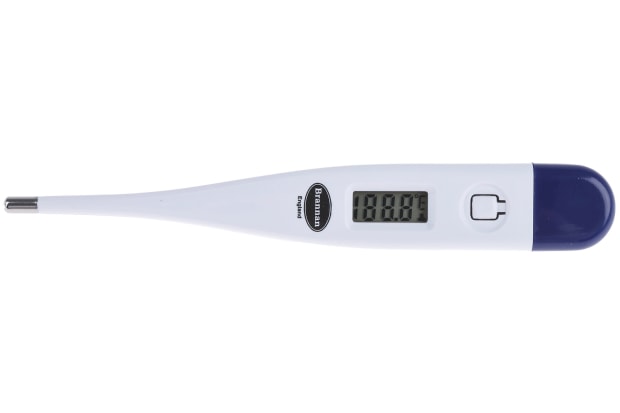
Medical digital thermometers generally need to be extremely hygienic and easy to sanitize, for obvious reasons. They also tend to be relatively portable, as they’ll frequently need to be carried around from site to site, and yet accuracy and speed of readout are often critical.
Many medical digital thermometers include combination probe types, which makes them usable for various different methods of body temperature reading other than the standard oral digital thermometer type. These are often removable and interchangeable for additional hygiene and ease of cleaning.
Handheld digital thermometers - especially those intended for use in the medical field - typically exhibit lightweight ergonomic designs for repeated all-day use, and often boast extra features such as pulse and respiration timers. Some medical needs are also ideally suited to infrared varieties of digital thermometers for non-contact and non-invasive applications.
Types of Digital Thermometers
As we’ve seen in the above sections, there are many different designs, brands, probe types and additional features available across the range of digital thermometers sold today. In this section, we’ll briefly list some of the more commonly found configurations and designs.
Digital thermometers for cars and autos
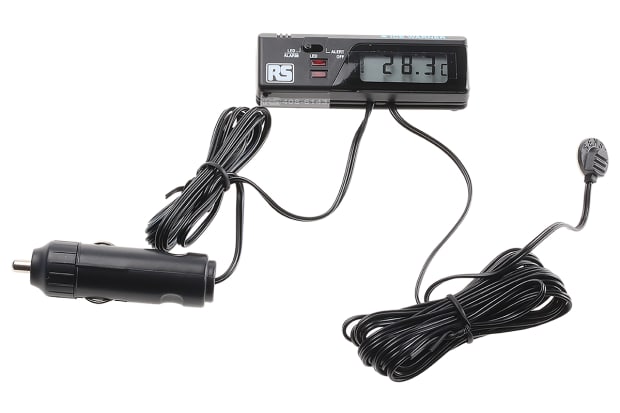
Digital thermometers for cars are increasingly common accessories used for reading both internal and external temperatures of individual components or areas within the vehicle. This might include the operating temperature of air conditioning systems, or outside ambient temperatures in harsh weather.
In-car digital thermometers often feature weatherproof sensors for the outside of the vehicle and can be powered either by an internal battery or via the car’s 12V socket on the center console.
Differential digital thermometers
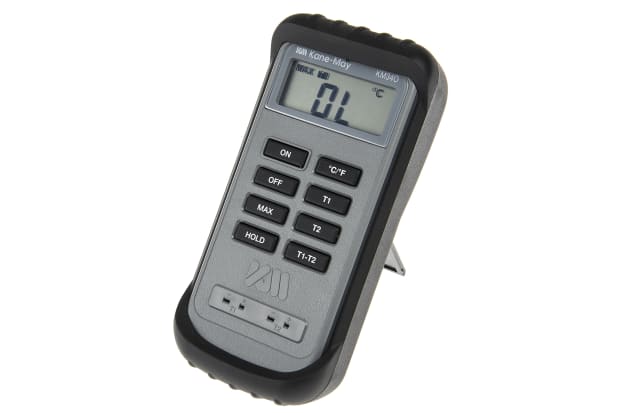
As the name implies, a differential digital thermometer is a product specifically designed for measuring the difference in temperature between two zones, components or surfaces by using two probes simultaneously.
This is often very useful in a range of HVAC and other engineering or industrial applications, such as radiator balancing in heating systems, and can sometimes come with various additional components such as oscillators, lock-in amplifiers or calorimeters for an increased range of functionality. Differential thermometers are commonly intended for use with K-type thermocouple sensors.

Wall-mounted digital thermometers
Some designs of digital thermometers are wall-mounted by design, principally for space-saving purposes and ease of reading when in hands-free use. This type tends to be better suited to taking ambient readings of environmental temperatures, although highly accurate probe-type configurations are also available as wall-mounted digital thermometers for use in HACCP self-monitoring applications.
These are often supplied with longer cabling runs between probes and display screens, to enable temperature-critical monitoring of liquids, air, refrigerated foodstuffs and semi-solids at distance from the readout module.

Wireless digital thermometers
Wireless digital thermometers can be extremely useful when monitoring and logging accurate temperatures over larger areas, or between multi-member work teams with numerous temperature-measuring devices spread across a wider zone.
For industrial and worksite purposes, many wireless temperature-reading setups come in modular, multi-handset configurations that are able to communicate remotely with one another to gain an overall picture of temperature shift, as well as to feed data back to a central logging and processing unit for quick and convenient collation of results.
In domestic use, wireless or Bluetooth digital thermometers simply offer an additional level of convenience and safety in allowing remote monitoring of food temperatures, in-car components, weather conditions and more, often while including the option to send collected data back to a smartphone, tablet, PC or other remote-viewing devices.
Summary
Digital thermometers provide fast, accurate, and versatile temperature measurement solutions adapted to a wide variety of settings from households to industrial plants. Their advanced sensor technologies, combined with features like portability and data connectivity, empower professionals and consumers to monitor temperature with confidence and precision. Whether ensuring food safety, maintaining HVAC systems, conducting scientific research, or caring for health, digital thermometers remain indispensable tools that continue evolving to meet today’s demands.