Arbitrary Waveform Generators
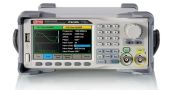
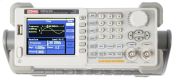
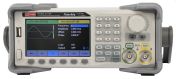
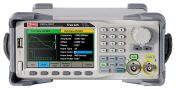
Arbitrary waveform generators (AWGs) are highly reliable electronic test devices used to create custom, user-defined electrical waveforms. Unlike standard function generators that produce only predefined periodic waveforms such as sine or square waves, an arbitrary waveform generator allows users to generate complex waveforms of virtually any shape, whether repetitive or single-shot signals.
This flexibility makes AWGs indispensable in advanced electronics testing, where customized waveforms simulate real-world signals for development, evaluation, and troubleshooting. Modern waveform generator units are often equipped with user-friendly touch screen displays with interfaces like USB and LAN, enabling easy data collection and transfer for precise and custom arbitrary waveform generation.
At RS Philippines, you’ll find a range of these devices, making it easy for you to get the signal generators you need for advanced electronics testing.
Waveform Generator Types
Waveform generators can be categorized by their capabilities and typical applications, serving diverse needs in electronics testing and development. Some of the common types you’ll find include:
Arbitrary Function Generators (AFGs)
An arbitrary function generator often works as a traditional static generator, producing standard waveforms like sine, square, ramp, triangle, and pulse. Some units also feature additional built-in waves, including exponential rise/fall and ECG signals, making them versatile for basic electronic testing and educational purposes in the Philippines.
Advanced Arbitrary Waveform Generators
Beyond standard functions, an arbitrary waveform generator allows users to create complex custom waveforms. Certain AWG models support capturing waves from multiple digital and mixed-signal oscilloscopes. They can also combine features with digital pattern generators to simulate data transfer, providing a sound pattern output to multiple bit connectors for advanced testing scenarios. They are ideal for sophisticated testing scenarios in communications, radar, and quantum experiments.
Programmable Waveform Generators
A programmable waveform generator offers enhanced control, with some models integrating detection schemes to adjust output waves in real time. This capability is based on measurement results from triggering signal demodulation, photon counting, or external oscilloscopes. Such real-time integration can significantly reduce application response time, which is critical for complex tasks like quantum communication.
USB Arbitrary Waveform Generators
For convenient connectivity, an arbitrary waveform generator can feature a USB interface. This allows for easy control and data transfer, making it a highly portable and user-friendly option for engineers and technicians in the field or in smaller lab setups across the Philippines.
How Does an Arbitrary Waveform Generator Work
An arbitrary waveform generator operates by synthesizing waveforms from a sequence of digitally defined data points, offering unparalleled flexibility in signal creation. Unlike simpler function generators, an AWG is not restricted to standard shapes, allowing it to replicate virtually any conceivable arbitrary waveform, whether repetitive or a unique, single-shot arbitrary signal.
This is achieved using digital signal processing technology, with the output typically delivered via a BNC connector. The generated waves can then be injected into the equipment under test for analysis. AWGs often include an attenuator, various ways to change the output wavelength, and the ability to automatically sweep the output waveform, making them invaluable for evaluating frequency responses.
The applications of arbitrary signal generators include:
- Advanced research and development projects across electronics and communication.
- Generating complex modulation schemes in telecommunications for testing advanced systems.
- Simulating signal impairments to evaluate device resilience under adverse conditions.
- Calibration and equipment validation in high-precision settings, ensuring accuracy and reliability.
Function Generator vs Arbitrary Waveform Generator: Similarities & Differences
For an electrical engineer in the Philippines, the choice between an arbitrary waveform generator and a function generator significantly influences the quality of research, testing, and development efforts. Both types of devices create electrical signals, yet they possess distinct features, making them suitable for particular applications.
Here are the key distinctions between these two types of signal generators:
- Waveform Creation: A digital waveform generator excels at producing custom, user-defined waveforms, including highly complex arbitrary waveform types. In contrast, a function generator typically offers only standard shapes like sine, square, and triangle waves.
- Precision and Range: AWGs generally provide higher precision and broader frequency ranges, often extending to gigahertz. On the other hand, function generators offer moderate to low precision and are usually limited to megahertz ranges.
- Modulation and Channels: AWGs feature extensive modulation capabilities (AM, FM, PM, and more) and commonly include multiple output channels. Function generators, conversely, have more limited modulation (mostly AM and FM) and are usually single-channel devices.
- Memory and Output: AWGs integrate larger memory for storing defined waveforms and offer wider amplitude and frequency output ranges. Function generators possess limited or no memory and more restricted output capabilities.
- Complexity and Cost: An arbitrary function generator typically has a steeper learning curve and a higher cost, reflecting its advanced features. Meanwhile, standard function generators are easier to use and come at a moderate to low price.
- Connectivity: AWGs often support multiple connectivity options like USB, Ethernet, and GPIB, while function generators usually offer USB or no connectivity.
Factors to Consider When Buying Arbitrary Waveform Generators in the Philippines
When you’re choosing arbitrary waveform generators in the Philippines, several key considerations will ensure you select the right instrument for your needs.
- Bandwidth and Sample Rate: These are crucial for generating high-frequency and complex waveforms accurately, so ensure the AWG's specifications meet or exceed your signal requirements.
- Resolution and Memory: Higher resolution (bits) provides greater waveform fidelity, while ample memory allows for longer and more intricate waveform sequences.
- Number of Channels: Consider how many independent output signals you need for your testing setup.
- Connectivity and Software: Look for convenient interfaces like USB or Ethernet, and evaluate the accompanying software for ease of waveform creation and analysis.
- Cost: Balance the features and performance with your budget to find the best value.
Order Arbitrary Waveform Generators Online from RS Philippines
RS Philippines is a trusted supplier and distributor of high-quality waveform generators. We offer an extensive range, ensuring reliable performance for diverse applications.
Our inventory also features top-tier instruments from well-known manufacturers like Keysight Technologies, BK Precision, and Teledyne LeCroy. Additionally, you can turn to us when you need other test and measurement devices such as spectrum analyzers and power quality recorders.
If you’re ready to enhance your testing capabilities, order your arbitrary waveform generator online from RS Philippines. We offer competitive pricing and reliable customer service. Additionally, you can expect fast delivery across the country, ensuring you receive your equipment promptly. For more details on delivery services and fees, please refer to our Delivery page.
Explore our comprehensive range of arbitrary waveform generators and other test and measurement equipment today.

Popular Searches
Related links
- RS PRO Arbitrary Waveform Generator 1 μHz Min
- BK Precision 4054 Arbitrary Waveform Generator 1 μHz Min
- Keysight Technologies FG33531A Arbitrary Waveform Generator 1-Channel
- RS PRO Arbitrary Waveform Generator 0 MHz Min
- Keysight Technologies 33600A Arbitrary Waveform Generator 2-Channel, 1 μHz Min
- Keysight Technologies 33600A Arbitrary Waveform Generator 1-Channel, 1 μHz Min
- Teledyne LeCroy T3AWG3252 Waveform Generator 1 μH Min
- RS PRO Arbitrary Waveform Generator 1 μHz Min