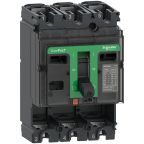
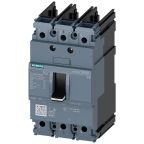
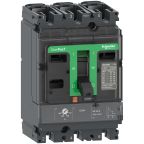
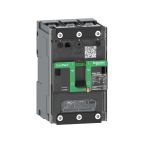
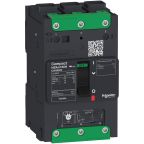
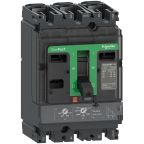
MCCBs
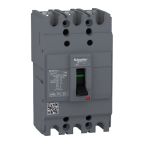
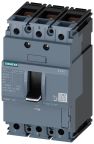
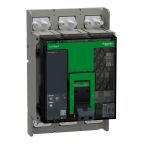
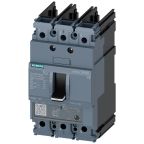
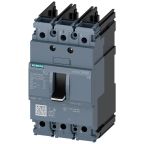
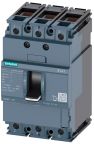
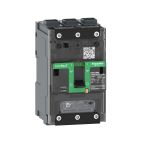
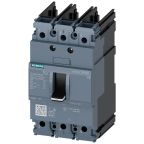
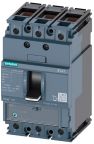
Moulded Case Circuit Breakers (MCCBs) are protective devices used to interrupt and protect electrical circuits from overcurrent, short-circuits, and sometimes earth fault conditions. They are commonly used in low and medium-voltage applications, offering significantly higher current ratings from 10A to 2,500A and breaking capacities up to 200kA compared to Miniature Circuit Breakers (MCBs). Engineered for demanding environments, MCCBs comply with standards like IEC 60947-2, ensuring reliability through rigorous tests for temperature rise, short-circuit capacity, and mechanical endurance.
What Is an MCCB?
An MCCB is a mechanical switching device designed to manually isolate a circuit and automatically trip under fault conditions. It provides essential protection for cables, feeders, and large loads against overcurrent and short-circuits. Built with a robust molded insulating case, it houses a trip unit, heavy-duty contacts, and terminal lugs, offering far more durability than standard domestic breakers.
Typically, an MCCB breaker features current ratings from approximately 16A up to 1600A+, with high breaking capacities (kA rating) and voltage ratings suited for demanding industrial and commercial systems. In a power distribution hierarchy, MCCBs sit firmly between small MCBs used for final circuits and high-end Air Circuit Breakers (ACBs) used for main incoming supplies.
How Does an MCCB Work?
An MCCB consists of several internal components designed to provide multi-layered protection. Its operation is generally divided into the following mechanisms:
- Thermal Protection (Overload):** **This involves a bimetallic strip that heats up and bends when subjected to sustained overcurrent. This bending motion slowly trips the breaker, protecting the circuit against prolonged overload and potential overheating of the cables.
- Magnetic Protection (Short-circuit):** **This features a magnetic trip unit that responds almost instantaneously to high fault currents. When a short-circuit occurs, the intense magnetic field forces the contacts open immediately to interrupt the dangerous flow of electricity.
- Trip Unit & Adjustability:** **Depending on the model, MCCBs feature either fixed or adjustable trip units. Many industrial units allow users to adjust long-time and short-time trip settings, enabling the breaker to be precisely matched to specific cable and load characteristics.
- Manual Operation & Reset:** **The device includes a robust handle for manual ON/OFF operation. Following a fault, the handle usually moves to a central "tripped" position; it must be moved to the "OFF" position to reset the mechanism before it can be switched back "ON." Most models also feature clear visual trip indicators for easy fault identification.
Difference Between an MCB and an MCCB
While both devices serve to protect electrical systems, there are technical distinctions regarding their load capacities and installation environments. Understanding the specific differences between an MCB and an MCCB is vital for proper system design:
- Current & Breaking Capacity:** **MCBs are designed for lower current ratings and fault levels, typically used for final circuits in residential or small commercial settings. Conversely, an MCCB breaker handles much higher current and kA ratings, sized specifically for feeders, main incomers, and large motors.
- Adjustability:** **A key functional difference lies in the trip settings. MCBs generally feature non-adjustable trip characteristics. MCCBs, however, often offer adjustable thermal and magnetic settings, allowing for precise coordination and better protection tuning to match specific load requirements.
- Size & Construction:** **MCBs are compact modules designed for standard DIN-rail mounting. In contrast, MCCBs feature a much larger molded case construction, often requiring bolted lugs or direct busbar connections to handle higher electrical stresses.
- Applications:** **MCBs are the standard choice for lighting, socket circuits, and small domestic loads. MCCBs are indispensable for main distribution boards, sub-mains, large industrial motors, and heavy-duty panels.
- Cost & Selection:** **It is important to note that the price of MCCBs is higher than that of an MCB due to the increased ratings and advanced features. However, they are essential in environments where fault levels are high and robust protection is mandatory.
Typical Applications of MCCBs
MCCBs are commonly used in a wide range of applications, including:
- Main and Sub-Distribution Boards: These units protect vital feeders and sub-mains in large commercial and industrial buildings. They act as the primary defense for the distribution network, ensuring that faults are isolated before they can affect the entire facility.
- Motor and Drive Protection:** **MCCBs provide robust supply protection for large motors, pumps, compressors, and HVAC systems. Often used alongside overload relays, they handle the high inrush currents typical of heavy machinery without nuisance tripping.
- Industrial Machinery and Process Lines:** **In manufacturing, these breakers protect panels feeding conveyors and process equipment where fault currents are high. Their reliability is a cornerstone of effective energy management, preventing unplanned downtime and protecting expensive automated assets.
- Renewable and Backup Power Systems: Used extensively in generator outputs, UPS incomers, and solar distribution boards, MCCBs provide reliable isolation. They ensure that backup power sources are safely integrated into the building's electrical system.
- Infrastructure and Utilities: Applied in water treatment, mining, and oil and gas, these breakers thrive in heavy-duty environments. Their robust construction meets the rigorous safety demands of utility sectors where protection failure is not an option.
How to Choose the Right MCCB
Selecting the correct MCCB is vital to ensure electrical safety and system uptime. When buying, these are the key factors to consider:
- Rated Current (In):** **Match the rating to your circuit load while allowing a margin for continuous operation, diversity factors, and future expansion.
- Breaking Capacity (Icu/Ics):** **Verify the potential fault level at the installation point and select an MCCB with an adequate kA rating to interrupt faults safely.
- Voltage Rating & Poles:** **Confirm your system voltage and select the appropriate number of poles, such as 2P, 3P, or 4P, to match your phase requirements.
- Trip Unit Type & Adjustability: Choose between fixed-trip or adjustable models to allow for better coordination with downstream MCBs or fuses.
- Installation & Connections:** **Confirm the frame size and terminal type (whether lug, busbar, or cage clamp) to ensure it fits your panel space.
- Environment & Standards: Account for ambient temperature and enclosure types, ensuring the unit meets relevant international standards like the IEC.
- Budget & Region: Compare prices and check for local stock availability.
Why Buy MCCBs from RS Philippines?
As a trusted supplier and distributor of Moulded Case Circuit Breakers, RS Philippines provides a comprehensive selection of MCCBs at competitive prices for industrial and commercial use. Our products are sourced from reputable brands like Siemens, Schneider Electric, and Eaton, ensuring reliable and high-quality options for every application.
Beyond MCCBs, we also offer a range of fuse and circuit breaker components, such as electrical panel boards and breaker accessories, to provide a complete solution for your power distribution and protection needs.
Browse our user-friendly online site to explore the full range and have your items conveniently shipped to your door. With our swift and flexible delivery options in the Philippines, we ensure the timely arrival of your products. Visit ourdelivery information page for more details on delivery times and fees.